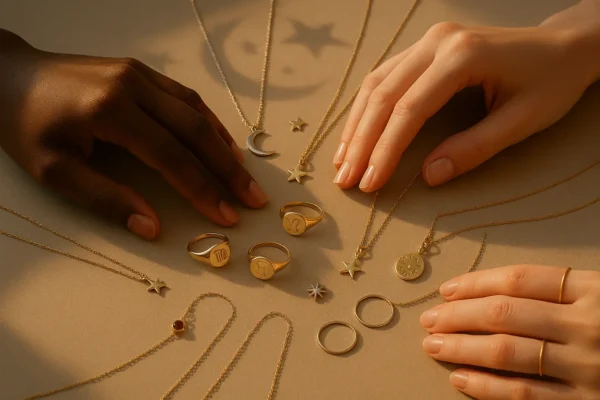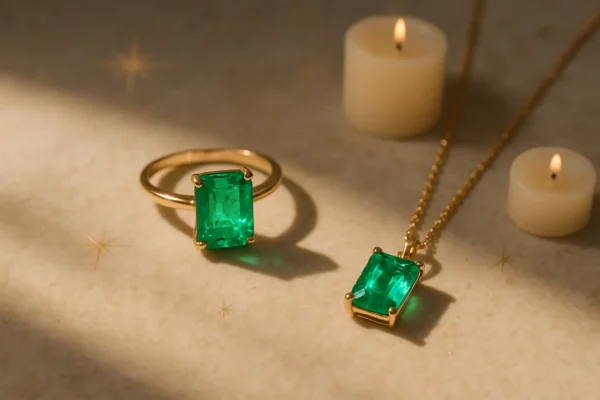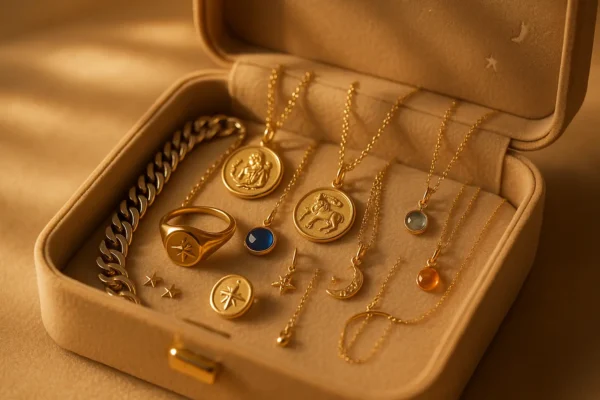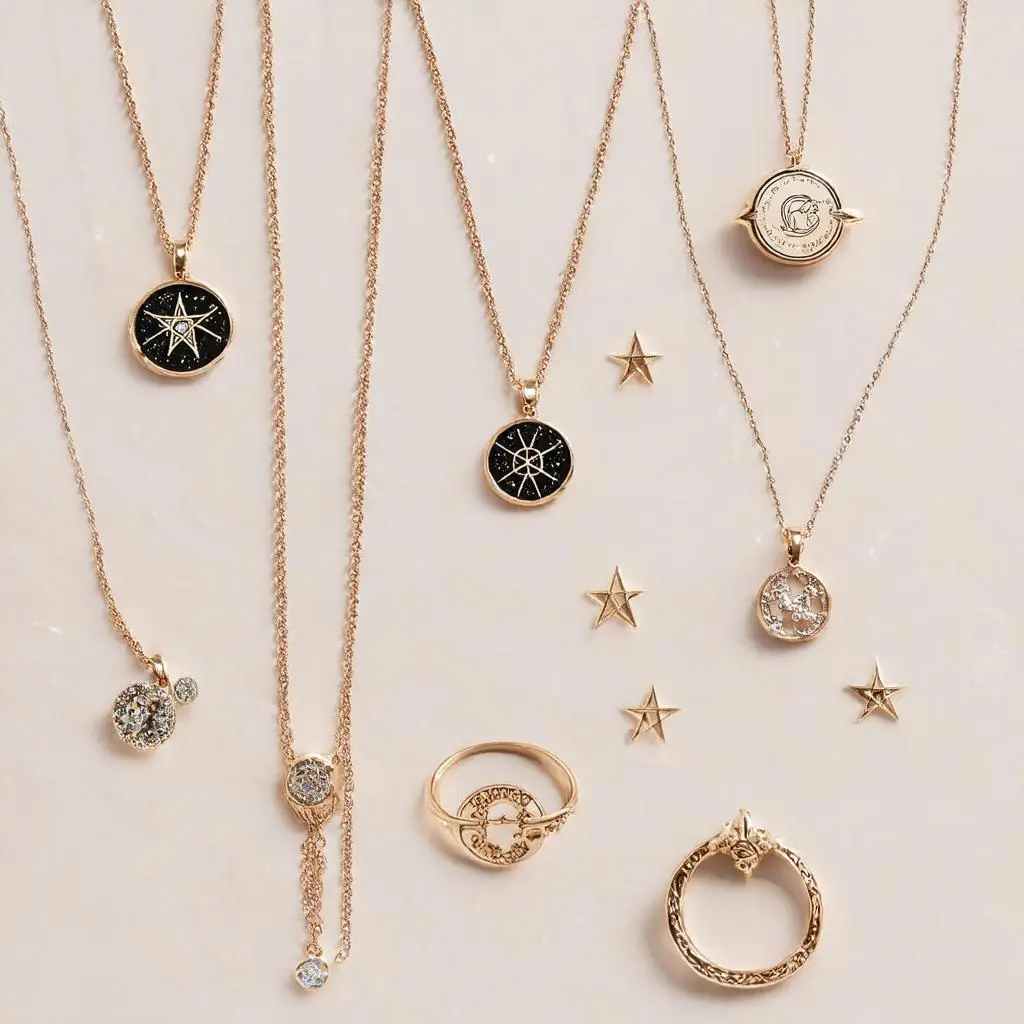
Protective symbol jewelry is everywhere again—and not just in a niche, mystical corner of fashion. It’s showing up in everyday wardrobes, office looks, weekend layers, and gifting trends. From pentagrams and zodiac signs to sacred letterforms and birthstone talismans, more people are choosing jewelry that does more than just look pretty. They want pieces that feel personal, intentional, and emotionally relevant.
That shift says a lot about how people shop now. Today’s consumer, especially the intentional, value-driven one, is looking for meaning as much as style. Jewelry has always carried symbolism, but now there’s a renewed interest in pieces that feel like modern amulets: wearable reminders of protection, luck, grounding, self-trust, or future goals. In a fast-moving world, that kind of symbolism feels comforting. It gives jewelry a job to do.
This is one reason celestial and ritual-inspired accessories are growing so quickly. People are drawn to designs that connect them to something bigger—whether that’s astrology, spiritual heritage, personal intention, or just the feeling of carrying a small source of strength through the day. Protective symbol jewelry fits perfectly into that space because it blends ancient meaning with modern wearability.
Why people want jewelry with meaning right now
A big reason this trend is returning is simple: people are craving deeper connection in the things they buy. Minimalism may still influence style, but emotional value matters more than ever. Consumers want purchases that tell a story, reflect identity, or support a personal ritual. Jewelry naturally fits that need because it’s worn close to the body and often every day.
Protective symbols are especially appealing because they offer both beauty and reassurance. A pentagram might represent balance, spiritual protection, or connection to the elements. Zodiac jewelry can feel like a shorthand for identity and self-understanding. Sacred letterforms may connect the wearer to family, faith, ancestry, or a private intention. These aren’t just decorative motifs—they can feel grounding, almost like personal tools for navigating daily life.
That’s also why the language around jewelry has changed. People aren’t only asking, “Does this match my outfit?” They’re also asking, “What does this represent?” “How does it make me feel?” and “Does this align with who I am right now?” A ring can become a confidence cue. A pendant can act like a quiet reminder of protection. A bracelet can symbolize luck, healing, or focus.
This trend also connects to the rise of self-care culture. For many people, self-care isn’t only skincare, sleep routines, or journaling. It’s also about creating small personal rituals that make everyday life feel more intentional. Putting on a symbolic necklace in the morning can be part of that. Stacking rings tied to personal milestones can be part of that too. Jewelry becomes less about dressing up for others and more about dressing with purpose for yourself.
The rise of celestial, ritual-inspired style
Protective symbol jewelry fits naturally into the broader popularity of celestial fashion. Stars, moons, zodiac signs, birthstones, cosmic shapes, and ritual-inspired details all tap into the same desire: people want accessories that feel mystical but still modern. They want pieces that suggest energy, symbolism, and story without feeling costume-like.
That’s why zodiac jewelry in particular continues to grow. Astrology has become part of mainstream personal expression, especially among consumers who see it as a fun identity tool, a reflective practice, or a spiritual framework. Wearing your zodiac sign is a way of saying something about who you are without having to explain it. It can feel intimate, stylish, and empowering at the same time.
The same goes for talisman-inspired designs linked to luck, abundance, love, or protection. These pieces appeal to spiritually-conscious professionals and self-care-minded shoppers because they fit into modern life so easily. A symbolic necklace can sit under a blazer. A signet ring with an amulet motif can elevate a neutral outfit. A birthstone charm can be layered into an everyday stack and still carry deep personal meaning.
This balance matters. Modern consumers don’t necessarily want loud, overly literal spiritual accessories. They’re often more drawn to quiet luxury: pieces that look refined and wearable, while still holding private meaning. That’s where symbolic fine jewelry stands out. It can be subtle enough for everyday wear but rich enough in meaning to feel special.
Why layered symbolism and reversible designs feel so modern
One of the most interesting parts of this trend is how people are styling these pieces. Protective jewelry today is rarely worn alone as a single statement with one fixed meaning. Instead, it’s often layered, mixed, and personalized. Someone might wear a zodiac pendant with a birthstone charm, a sacred letter necklace, and a protective ring stack all at once. Each piece adds a layer of intention, creating a look that feels unique to the wearer.
Layered symbolism is appealing because identity itself is layered. People don’t want to be reduced to one label, one energy, or one story. They want jewelry that reflects complexity: career ambition and spiritual grounding, softness and strength, style and sentiment. A jewelry stack can hold all of that at once. It can say, “This is where I come from, what I value, what I’m calling in, and what protects my peace.”
Reversible designs are trending for a similar reason. They offer flexibility without losing meaning. One side might feature a celestial motif, while the reverse carries a sacred symbol, engraved message, or minimalist finish. That makes the piece feel dynamic and personal. Some days the wearer may want the symbolism visible. Other days they may want something more subtle and private. Reversible jewelry supports both moods.
That versatility also makes symbolic jewelry more practical. Consumers love pieces that can transition from day to night, from work to weekend, or from outward statement to inward ritual. A reversible talisman or dual-meaning pendant gives them more ways to wear one piece, which adds value as well as emotional connection.
For gift-givers, this is a major advantage too. Protective jewelry already feels thoughtful, but when it includes reversible details or layered symbolic elements, it becomes even more meaningful. It shows care without being generic. It feels chosen, not random.
Decorative, personal, and made to last
The reason protective symbol jewelry is trending again comes down to one powerful combination: it offers style with substance. People still want beautiful accessories, but they also want pieces that reflect intention, identity, and emotional relevance. A pentagram pendant, zodiac signet ring, sacred letter necklace, or birthstone talisman can be decorative—but it can also feel reassuring, empowering, or deeply personal.
That’s exactly why this category resonates with today’s intentional consumer. They’re looking for accessories that work on multiple levels. They want everyday jewelry that feels elevated but not flashy, spiritual but not overwhelming, meaningful but still easy to wear. They appreciate layered symbolism, subtle celestial references, and designs that can adapt to different moods or moments. They also care about quality, durability, and ethical craftsmanship, because meaningful jewelry should be made to stay with them.
In that sense, protective jewelry isn’t just “back.” It has evolved. It now speaks to a generation that values self-expression, sustainability, and personal ritual all at once. These shoppers aren’t choosing symbolic pieces because it’s a passing fad. They’re choosing them because they want jewelry that feels like more than an accessory. They want it to say something, support something, and maybe even protect something.
And honestly, that’s what makes this trend feel lasting. When jewelry becomes part of how people express hope, identity, intention, and everyday strength, it stops being just another style moment. It becomes something they reach for again and again.