Around 40,000 to 50,000 years ago, something huge shifted in the human story.
Our ancestors weren’t only surviving, hunting, gathering, and moving through harsh landscapes. They were also creating. They were painting cave walls, carving small figures, making ritual objects, and stringing together shells, bones, stones, teeth, and beads to wear on the body.
That might sound simple at first. A bead is just a bead, right?
Not really.
The moment early humans started decorating themselves, they were doing something deeply human: turning the visible body into a message. A necklace, a carved pendant, or a bracelet could say, “This is who I am,” “This is my group,” “This protects me,” or “This connects me to something greater.”
Long before written language, symbolic objects helped humans tell stories. They carried identity, memory, belief, and belonging. In that sense, jewelry may be one of the oldest forms of personal expression we have.
And honestly? We’re still doing the same thing today.
When someone wears a birthstone, a zodiac pendant, an amulet ring, a protection charm, or a bracelet chosen for a specific intention, they’re participating in an ancient tradition. Modern symbolic jewelry may be more polished, sustainable, and stylish, but the emotional reason behind it is timeless: humans have always wanted to wear meaning.
Beads, bones, shells, and the birth of identity
Some of the earliest known ornaments were made from natural materials: shells with tiny holes, animal teeth, carved bone, ivory beads, and mineral pigments. These objects took time to find, shape, drill, polish, and wear. That matters.
If early humans were spending energy creating adornments, those pieces probably held real social or spiritual importance. They weren’t random accessories. They were chosen.
A shell necklace might have shown where someone came from. A carved bead could have marked membership in a group. A rare material might have signaled status, skill, or access to trade routes. A pendant worn close to the skin may have been connected to protection, fertility, hunting success, ancestry, or ritual.
In a world without business cards, social media bios, school uniforms, or wedding rings, adornment helped people recognize one another.
It may have answered questions like:
- Are you part of my community?
- What role do you hold?
- Are you a healer, maker, hunter, parent, elder, or spiritual figure?
- What do you believe in?
- What energies or forces are you asking to guide you?
This is where jewelry becomes more than decoration. It becomes a language.
And unlike spoken language, jewelry stays visible. It moves with the body. It speaks quietly, but constantly.
That’s still one of the reasons symbolic jewelry feels so powerful today. A zodiac signet ring, a birthstone necklace, or a protective amulet can express something personal without needing a whole explanation. It’s subtle, but it says something.
It says: this matters to me.
Protection, power, and the unseen world
For ancient people, the world was full of mystery. Storms, illness, birth, death, migration, dreams, animals, stars, seasons—everything carried meaning. Before science could explain natural forces, humans used myth, ritual, symbol, and sacred objects to create a sense of relationship with the unknown.
Jewelry likely played a role in that relationship.
An object worn on the body could become a protective companion. A charm might be carried into danger. A bead could be used in ceremony. A carved figure could represent fertility, abundance, ancestors, or spiritual guardianship. Certain colors, stones, shapes, or materials may have been chosen because they felt connected to strength, luck, healing, or transformation.
This is the ancient root of what we now call amulets and talismans.
The difference is subtle but interesting: an amulet is often worn for protection, while a talisman is usually connected to attracting something specific—luck, love, courage, wealth, clarity, or success. Across cultures and centuries, humans have created both.
Think about how familiar that still feels.
People today wear jewelry for career confidence, emotional grounding, love, abundance, calm, protection, or fresh starts. Someone might wear a Dzi bead bracelet for spiritual support, a birthstone for personal alignment, a zodiac pendant to honor their sign, or a fidget ring to soothe anxious energy during a stressful day.
The materials have changed. The intention hasn’t.
We still like having something physical to hold onto when life feels uncertain. We still want reminders of who we are and what we’re calling in. We still trust symbols to help us focus our energy.
That’s why intention-based jewelry fits so naturally into modern self-care. It’s beautiful, yes, but it’s also practical on an emotional level. It gives your hopes somewhere to live.
From cave walls to zodiac charts
Cave art gives us another clue about the symbolic mind of early humans. Animals, handprints, abstract marks, and ritual scenes suggest that prehistoric people weren’t only observing the world—they were interpreting it.
They were making meaning.
The sky likely played a major role in that meaning-making. Long before formal astrology systems developed, humans watched the moon, stars, and seasonal cycles. Celestial patterns helped guide migration, planting, hunting, ceremony, and storytelling. The night sky was both calendar and mystery.
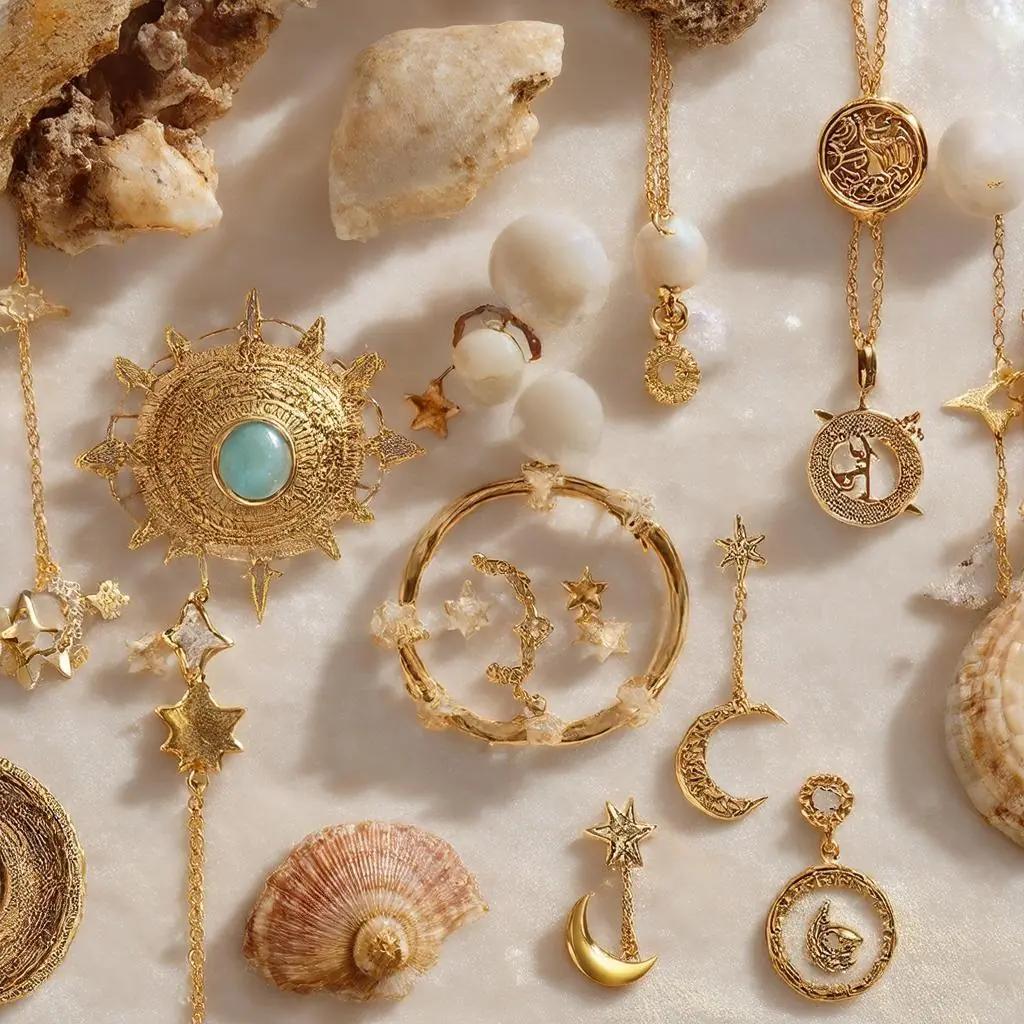
So when modern people wear zodiac jewelry, moon charms, star earrings, or celestial talismans, it isn’t just a trend. It connects to a very old instinct: looking upward for guidance and then bringing that cosmic meaning down to earth, close to the body.
A zodiac piece can feel like a tiny personal map. Aries might wear something bold to honor courage and momentum. Virgo may lean toward minimalist stacking pieces that feel clean, intentional, and refined. Taurus might choose luxurious textures that connect to comfort and stability. Scorpio may prefer protective, mysterious symbols with emotional depth.
Whether someone sees astrology as spiritual, reflective, playful, or deeply personal, zodiac jewelry works because it turns identity into an object. It lets people wear their season, their element, their energy, and their story.
Birthstones do something similar. They link personal identity to time, color, and natural material. A child’s birthstone necklace can feel like protection. A parent wearing their children’s stones can carry family close. A professional wearing their own birthstone to work might see it as a quiet confidence piece—a private reminder of strength.
This is where ancient symbolism meets modern life.
Today’s meaningful jewelry doesn’t need to be loud or heavily branded. In fact, many intentional consumers are drawn to quiet luxury: pieces that look elegant but hold private significance. A simple ring can carry a whole ritual. A delicate bracelet can be a daily affirmation. A pair of celestial earrings can remind you to move through the day with purpose.
Why we still wear our stories
Symbolic jewelry has lasted for tens of thousands of years because it meets a real human need.
We want to belong.
We want to be seen.
We want protection.
We want beauty.
We want to remember.
We want to believe our lives are connected to something larger.
That’s why meaningful jewelry never really goes out of style. Trends change, but the desire to wear personal power stays.
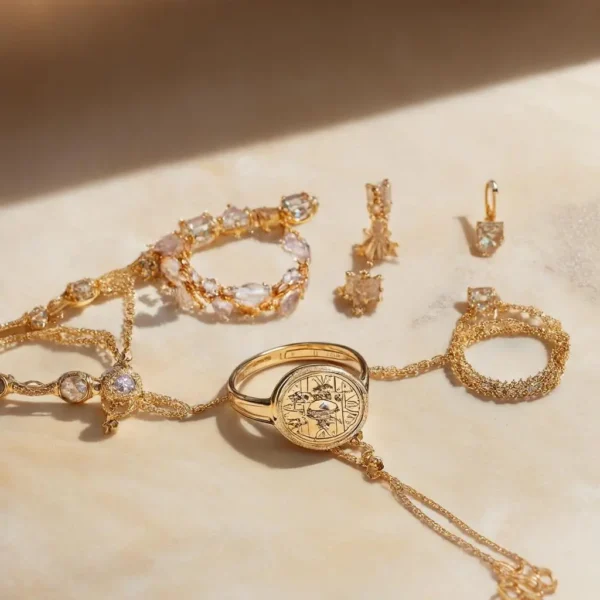
A prehistoric shell bead and a modern amulet signet ring may look completely different, but emotionally, they are relatives. Both are chosen. Both sit close to the body. Both carry a message that goes beyond appearance.
And in a fast, noisy world, that kind of meaning feels especially valuable.
When you choose a piece of jewelry today, you’re not only picking something that matches an outfit. You might be choosing a symbol for the season you’re entering. A reminder of the confidence you’re building. A protective piece for your child. A talisman for wealth luck or career breakthrough. A calming accessory that helps your hands settle when your mind is racing. A zodiac charm that says, “This is my energy, and I’m owning it.”
That’s the beauty of symbolic jewelry: it can be deeply personal without needing to explain itself to everyone.
It can be stylish and spiritual.
Ancient and modern.
Simple and powerful.
Decorative and functional.
Humans have always worn meaning because meaning helps us move through the world. From the first beads to today’s birthstones, zodiac pieces, amulets, talismans, and intention-based accessories, jewelry has never been only about looking good.
It’s about carrying a story.
And sometimes, the smallest piece you wear can hold the biggest part of who you are.