If you’ve ever shopped for birthstone jewelry, talisman rings, zodiac charms, or symbolic everyday pieces, you’ve probably seen terms like lab-grown, lab-created, synthetic, and man-made used almost interchangeably. And honestly? It can get confusing fast.
A lot of shoppers hear “synthetic” and immediately think “fake,” but that’s not always accurate. In modern jewelry language, many manufactured gemstones are real materials created in a controlled environment instead of being mined from the earth. Depending on the stone, they may have the same chemical makeup, crystal structure, hardness, color, sparkle, and durability as their natural counterparts.
So, if you’re choosing a garnet-inspired protection piece, an emerald-toned heart chakra pendant, a sapphire-style career talisman, or a birthstone bracelet for your child, the wording matters. It helps you understand what you’re buying, how it may wear over time, what it means ethically, and how it fits your budget.
At Rochas Jewelry, where symbolic pieces are often chosen for intention as much as beauty, clarity matters. A gemstone doesn’t have to be mined to carry meaning. But you should always know what kind of stone you’re choosing—and why.
Lab-grown, lab-created, synthetic, and man-made: what do they actually mean?
Let’s break down the most common terms you’ll see in product descriptions.
Lab-grown usually means a gemstone was grown in a laboratory using advanced technology that recreates the conditions under which gems form naturally. For example, a lab-grown sapphire can have the same chemical composition and physical properties as a mined sapphire. It is not “pretending” to be sapphire—it is sapphire, just created above ground.
Lab-created means almost the same thing as lab-grown. This term is often used in jewelry descriptions because it sounds a little more approachable and clear. A lab-created ruby, for instance, is typically made with the same mineral composition as natural ruby. It has the rich red color and durability people expect, but it was created in a controlled setting rather than extracted from a mine.
Synthetic is the technical gemological term for a lab-created gemstone that has essentially the same chemical, optical, and physical properties as the natural version. This is the word that causes the most confusion. In everyday language, “synthetic” can sound artificial or cheap. In gemology, though, synthetic ruby or synthetic sapphire can mean a real ruby or sapphire material made by humans. It does not automatically mean plastic, glass, or imitation.
Man-made is a broader phrase. It can refer to lab-grown gemstones, but it can also describe materials that imitate the look of a gemstone without being the same material. Because it’s less specific, it’s helpful to look for more detail in the description. Is the stone lab-created sapphire? Crystal? Cubic zirconia? Glass? Resin? The exact material tells you much more than the phrase “man-made” alone.
The key takeaway: these terms describe origin and production method. They don’t always describe quality, value, durability, or spiritual meaning by themselves.
“Not mined” doesn’t mean “not real”
One of the biggest myths in jewelry shopping is that only mined stones are “real.” Natural gemstones are formed by geological processes over millions of years, which gives them rarity, history, and one-of-a-kind inclusions. That natural origin is meaningful to many people, especially collectors and those drawn to earth-formed materials.
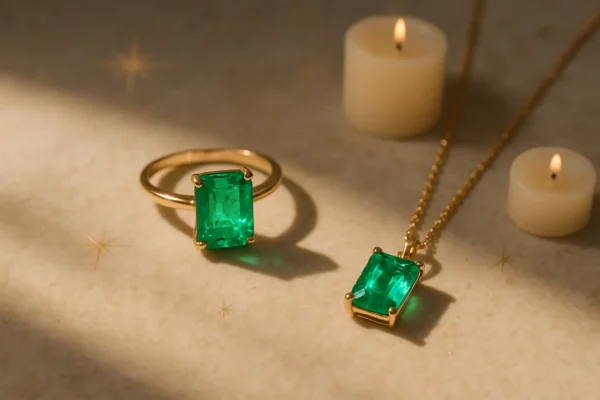
But lab-grown gemstones can also be real gemstones. If a lab-grown emerald has the same chemical identity as emerald, then it is emerald. The difference is where and how it formed.
That said, not every manufactured stone is the same as a mined gem. Some stones are simulants, meaning they look like another gem but are made from a different material. Cubic zirconia, for example, is often used as a diamond alternative. It can be beautiful, sparkly, and affordable, but it is not diamond. Glass or crystal may be used to create color and shine, but they do not have the same hardness or composition as gemstones like sapphire, amethyst, or topaz.
This is why product descriptions matter so much. A clear listing should help you understand whether the stone is:
- A natural mined gemstone
- A lab-grown or lab-created gemstone with the same composition as the natural version
- A simulant that resembles a gemstone but is made from another material
- A treated or enhanced stone, where color or clarity has been improved
None of these categories is automatically “bad.” They simply serve different purposes.
For everyday symbolic jewelry, a lab-created stone can be a smart choice because it often offers beauty, durability, and a more accessible price. For a once-in-a-lifetime heirloom, you may prefer a natural stone because of its rarity and geological story. For a trend piece or a budget-friendly birthstone gift, a simulant may make total sense.
The best option is the one that matches your intention, lifestyle, and expectations.
How to choose the right gemstone for birthstones, talismans, and everyday rituals
When you’re buying meaningful jewelry, the “right” gemstone isn’t only about origin. It’s also about how the piece will live with you.
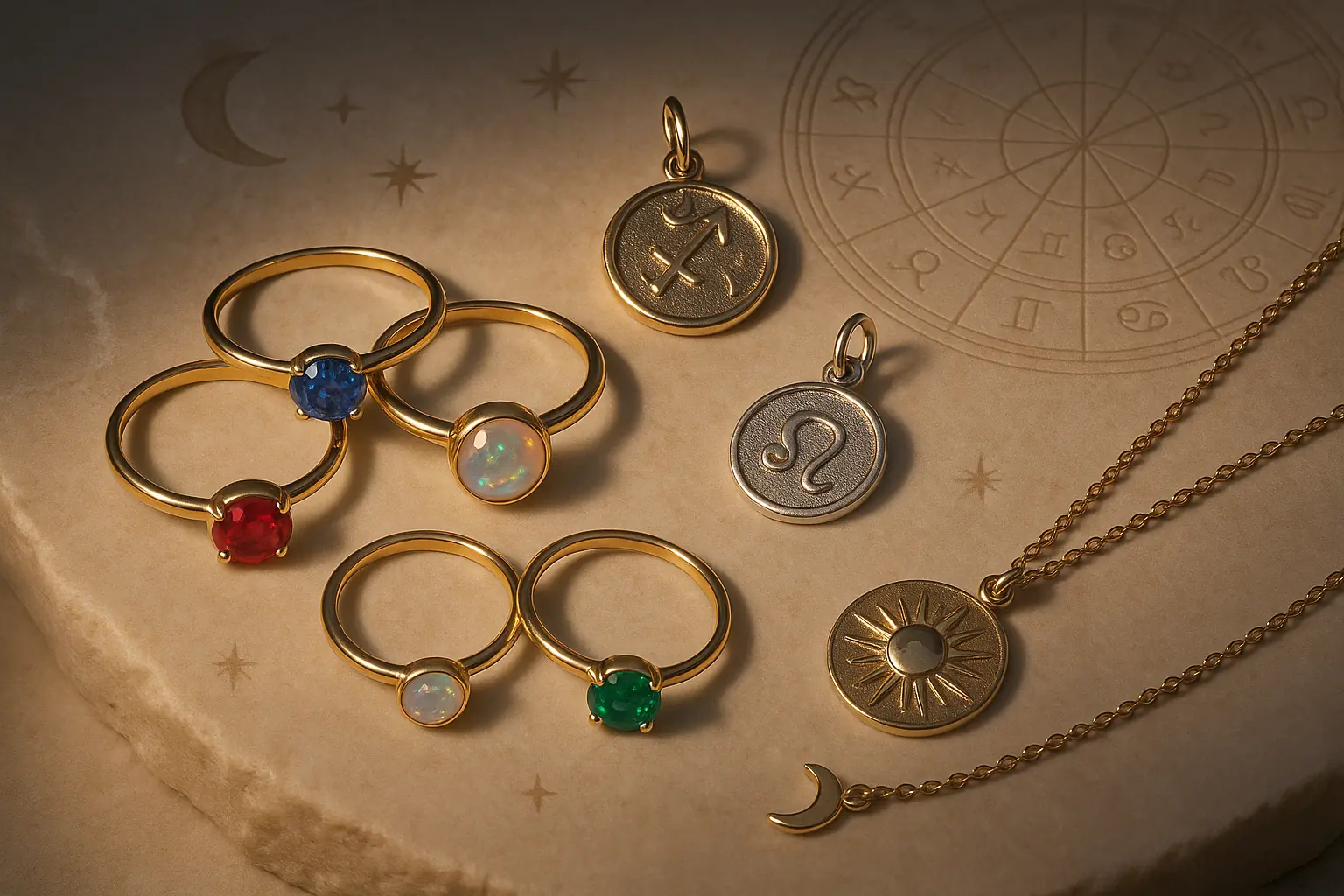
Start with intention. Are you choosing a January garnet piece for grounding? A moon-inspired opal look for intuition? A blue sapphire-style ring for focus, discipline, or career energy? Whether the stone is natural or lab-created, the meaning you attach to it can still be deeply personal. Symbolic jewelry works because it becomes part of your daily ritual.
Next, think about durability. Some gemstones are better for everyday wear than others. Rings and bracelets take more knocks than pendants or earrings, so hardness and toughness matter. Lab-created sapphires and rubies, for example, are known for strong durability, making them practical for daily pieces. Softer stones may be better for occasional wear or protected settings.
Then consider ethics and sustainability. Many shoppers are drawn to lab-grown gemstones because they avoid some of the environmental and labor concerns connected to mining. Natural stones can also be responsibly sourced, but transparency is key. If ethical sourcing is important to you, look for brands that explain their materials clearly and commit to responsible practices.
Budget is another major factor. Lab-created gemstones are often more accessible than mined gems of similar size and appearance. This makes them especially appealing for birthstone jewelry, kids’ pieces, stacking rings, and talismans you want to wear daily without feeling anxious about cost. Accessible luxury is about choosing something beautiful and meaningful without overextending yourself.
Finally, trust your personal meaning. A stone doesn’t need to be rare to be powerful in your life. A birthstone necklace given by a parent, a zodiac ring worn before big meetings, or a bracelet chosen during a new chapter can become emotionally valuable because of the story attached to it.
That’s the magic of symbolic jewelry: the material matters, but the relationship you build with the piece matters too.
Smart shopping tips for modern gemstone language
Before buying gemstone jewelry, take a minute to read the description closely. The best jewelry choices come from knowing exactly what you’re getting.
Look for specific wording. “Lab-created ruby” is clearer than “red gemstone.” “Simulated emerald” means something different from “lab-grown emerald.” “Crystal” and “glass” may be beautiful, but they should not be confused with true gemstone materials.
Ask yourself a few simple questions:
- Is the stone natural, lab-created, or simulated?
- Is it meant for daily wear or occasional wear?
- Does the material match the price?
- Is the brand transparent about metals, plating, and gemstone type?
- Does the piece align with my intention or the recipient’s birthstone meaning?
Also pay attention to the metal, especially for everyday pieces. Durable, skin-friendly materials like medical-grade stainless steel, sterling silver, gold plating, and carefully crafted settings can make a huge difference in how long a piece stays beautiful. A gemstone is only one part of the jewelry—the setting, finish, and craftsmanship matter just as much.
For shoppers who love zodiac rituals, birthstone protection pieces, wealth-luck talismans, or quiet luxury staples, modern gemstone language is empowering. It helps you shop with confidence instead of confusion.
Lab-grown, lab-created, synthetic, and man-made are not words to fear. They’re words to understand. Once you know what they mean, you can choose jewelry based on what actually matters to you: beauty, durability, ethics, budget, and the meaning you want to carry every day.