A birthstone gift can tell a child something simple and lovely: “You belong, you’re loved, and this little piece is part of your story.”
Maybe your family gives birthstone jewelry for milestone birthdays. Maybe a grandparent wants to pass along a tradition. Or perhaps you’re starting something new—a small ritual that connects your child’s birth month with a wish for courage, kindness, or curiosity.
Birthstones make that easy, but their meanings aren’t fixed rules. Different traditions assign different stones and qualities to each month, and some months have several options. You can choose a traditional birthstone, explore an alternative, or simply pick a color your child loves.
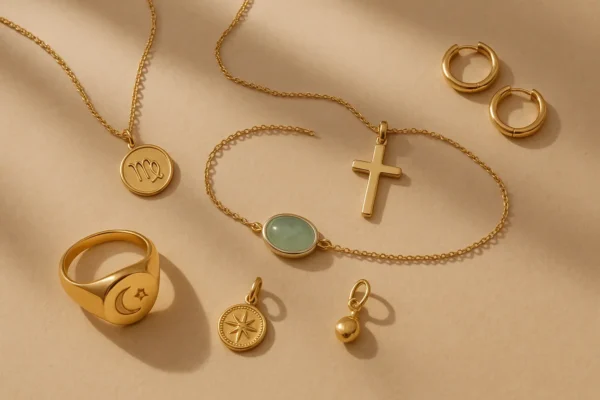
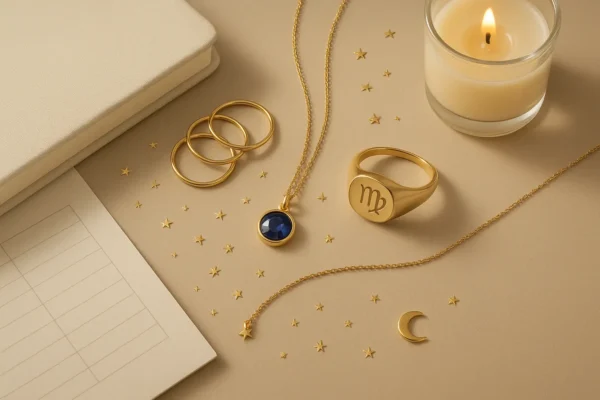
For families drawn to Rochas Jewelry’s celestial and symbolic approach, a birthstone talisman can be a keepsake with intention. The most meaningful part, though, isn’t a promise attached to the stone. It’s the message you give with it.
Try adding a handwritten note:
- “May this remind you that you can always ask us for help.”
- “A little reminder of your big, brave heart.”
- “Wherever life takes you, you have a home with us.”
If your family describes a stone as protective, explain that language gently. Protective symbolism expresses love and hope; jewelry does not prevent injury, illness, or misfortune. It never replaces supervision, safe sleep practices, medical care, or other practical safeguards.
That distinction doesn’t take away the magic of the gift. It gives the magic a grounded, loving meaning.
2. Match the Jewelry to Their Age—not Just the Occasion
A beautiful piece isn’t automatically suitable for a child. Before choosing a style, think about their habits, daily activities, and ability to follow wear-and-care rules.
For babies and toddlers, choose a keepsake rather than wearable jewelry. Chains and cords can pose strangulation risks, while beads, stones, and other small components can become choking hazards. Keep jewelry out of reach, and never attach it to a crib or sleep space. Teething necklaces—including amber styles—aren’t a safe alternative.
You can still celebrate a birth or first birthday with a birthstone piece. Store it securely with a dated note and give it to the child to wear when they’re older. Another option is for a parent to wear the symbolic piece, keeping it away from little hands that might pull or mouth it.
For older children, readiness matters as much as age. Can they tell you when something feels tight, itchy, or uncomfortable? Will they remove it when asked? Do they still chew objects or put small items in their mouths? Begin with short, supervised wear for special occasions rather than assuming jewelry should stay on all day.
For tweens and teens, involve them in the choice. A design they genuinely like is more likely to become a lasting keepsake. Talk through school rules, sports requirements, and when to take it off.
For children, remove jewelry before sleep, rough play, sports, swimming, and activities where it could catch on equipment. No clasp or “child-friendly” label makes a piece safe for every situation.
3. Look Closely at Construction, Fit, and Metals
The prettiest stone in the display won’t make up for a loose setting or uncomfortable fit. When shopping Rochas Jewelry—or any brand—check the details of the specific piece rather than relying on a collection description.
Start with secure construction. Look for smooth edges, well-finished connections, and a stone setting that doesn’t snag. A low-profile bezel setting, which surrounds the stone with a metal rim, may be less snag-prone than a raised setting. Avoid loose charms, dangling beads, and components that can detach easily.
Check that clasps work properly, but remember: a secure clasp helps prevent loss; it doesn’t eliminate strangulation or entanglement risks. Ask the seller whether the item is designed and tested for children, what age guidance applies, and whether it meets applicable children’s jewelry safety requirements, including limits on lead and cadmium.
Measure for fit instead of buying oversized. Extra room can mean extra snagging, while a tight bracelet or ring can pinch or restrict circulation. Use the seller’s measurement guide, then check the fit on your child. Jewelry shouldn’t leave indentations, cause discomfort, or slip off easily.
Adjustable styles can offer flexibility, but they’re not automatically safer. Long extension chains may dangle, and adjustable rings can pinch. Recheck fit regularly as your child grows.
Get specific about metal sensitivities. Rochas describes materials across its range that include recycled gold plating, sterling silver, and 316L stainless steel. Those descriptions are a starting point—not a guarantee that every item has the same composition.
Ask about the base metal, plating, posts, backs, and clasp. Gold plating can wear down and expose the metal underneath. Sterling silver contains other metals, and 316L stainless steel typically contains nickel; “medical-grade” doesn’t guarantee that a nickel-sensitive child will tolerate it.
If your child has a known metal allergy, ask their clinician about suitable materials. Remove jewelry if redness, itching, swelling, or soreness develops, and seek medical advice for persistent or concerning symptoms.
4. Make Care Part of the Family Ritual
A few small habits can protect both your child and the keepsake.
Before each wear, quickly check the clasp, links, stone setting, and any earring backs. If something is loose, sharp, bent, or damaged, put the piece away until it’s repaired. Don’t let a child keep wearing it “just this once.”
After wear, wipe it gently with a soft cloth and store it separately in a dry, secure place. Keep jewelry and cleaning products out of reach of younger children.
Cleaning should follow the care instructions for the exact metal and stone. Birthstones vary considerably in durability: pearls and opals, for example, need different treatment from harder gems. Avoid assuming that household cleaners, soaking, or an ultrasonic cleaner are safe. Keep plated pieces away from abrasive polishing, which can remove the finish.
Even durable jewelry benefits from being removed before bathing and swimming. “Tarnish-resistant” shouldn’t be read as “care-free,” and no finish stays perfect regardless of use.
For an older child, make the routine simple: take it off, check it, wipe it, put it away. It’s a small lesson in caring for something meaningful—not a test they need to pass.
5. Choose Lasting Value Beyond the Price Tag
The best birthstone gift isn’t necessarily the most expensive. It’s the one that suits your child now—or can safely wait until they’re ready—and has a story worth keeping.
Rochas Jewelry’s accessible-luxury approach may appeal to parents balancing meaning with budget. Still, compare individual pieces on construction, material transparency, care needs, warranty terms, and repair options. A plated piece can be a lovely affordable keepsake, but it won’t wear exactly like solid gold. Ask whether replating, clasp replacement, or resizing is possible rather than assuming it is.
If sustainability matters to your family, look for specific information about recycled materials and environmental claims. Choosing a piece you can care for, repair, and keep is also a practical way to reduce unnecessary replacement.
Think beyond today’s fit. A pendant might eventually move to a different chain, while a professionally assessed stone could someday be reset. Not every piece can be altered, so check before making that part of the plan.
Most importantly, leave room for your child’s own relationship with the gift. They may love the birthstone tradition, enjoy the color, or treasure it mainly because it came from you.
A birthstone doesn’t have to promise protection or good fortune to matter. With thoughtful selection, sensible safety habits, and a little family history, it can become something better: a lasting reminder that they are loved.