Some jewellery finishes an outfit. Other pieces remind you who you are, where you’ve been or what you’re working towards. That second category is what makes the medallion revival feel so personal.
Historically, medallions and pendant-like ornaments have carried meanings connected to authority, devotion, membership and identity. A portrait, religious image or family emblem could communicate something important about its wearer. Today’s interpretations bring that storytelling into everyday life through zodiac motifs, birthstones, engraved symbols and even unusual found objects.
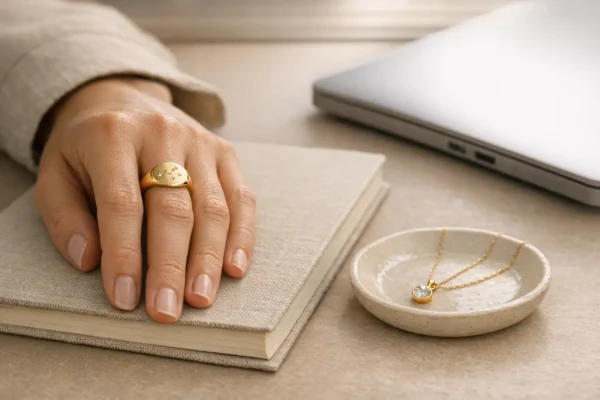
For spiritually curious professionals and self-care advocates, the appeal is easy to understand. A small pendant can sit quietly beneath a work shirt, then become the centre of a layered look after hours. It doesn’t need a visible logo—or a meaning anyone else recognises—to feel valuable.
That approach fits Rochas Jewelry’s focus on celestial and symbolic pieces: choosing jewellery for the intention you associate with it, rather than simply following a trend.
Your medallion might celebrate a promotion, honour someone you love or mark a fresh start. It could also be less momentous: a reminder to pause before saying yes to another commitment. The best story doesn’t have to be dramatic. It just has to be yours.
2. Choose a zodiac motif or birthstone that actually means something to you
Start with a simple question: What do I want this piece to remind me of?
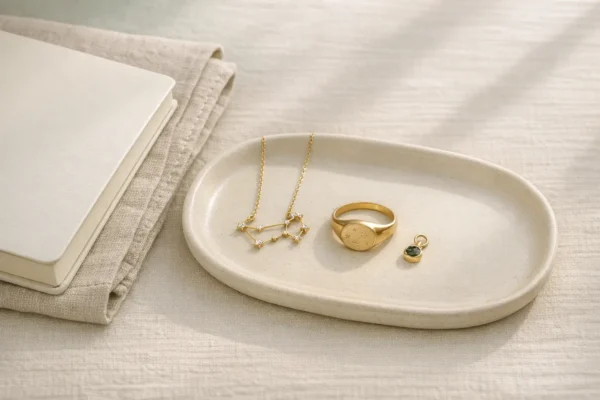
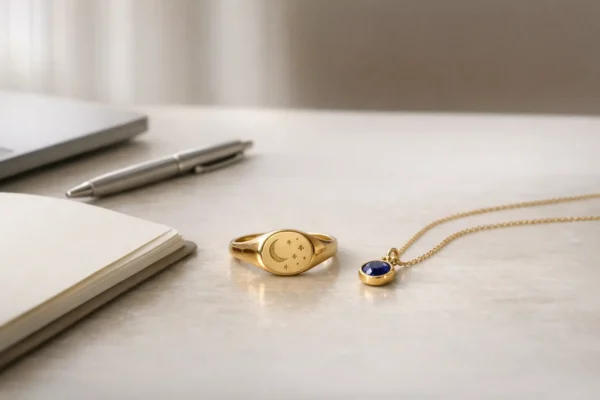
If astrology is part of your personal practice, a zodiac medallion can offer a familiar symbolic language. Your sun sign is an obvious starting point, but you might prefer a moon-sign motif, a rising-sign symbol or a design representing someone important to you.
Think about the visual language, too:
- Zodiac glyphs are understated and work well for a quiet-luxury look.
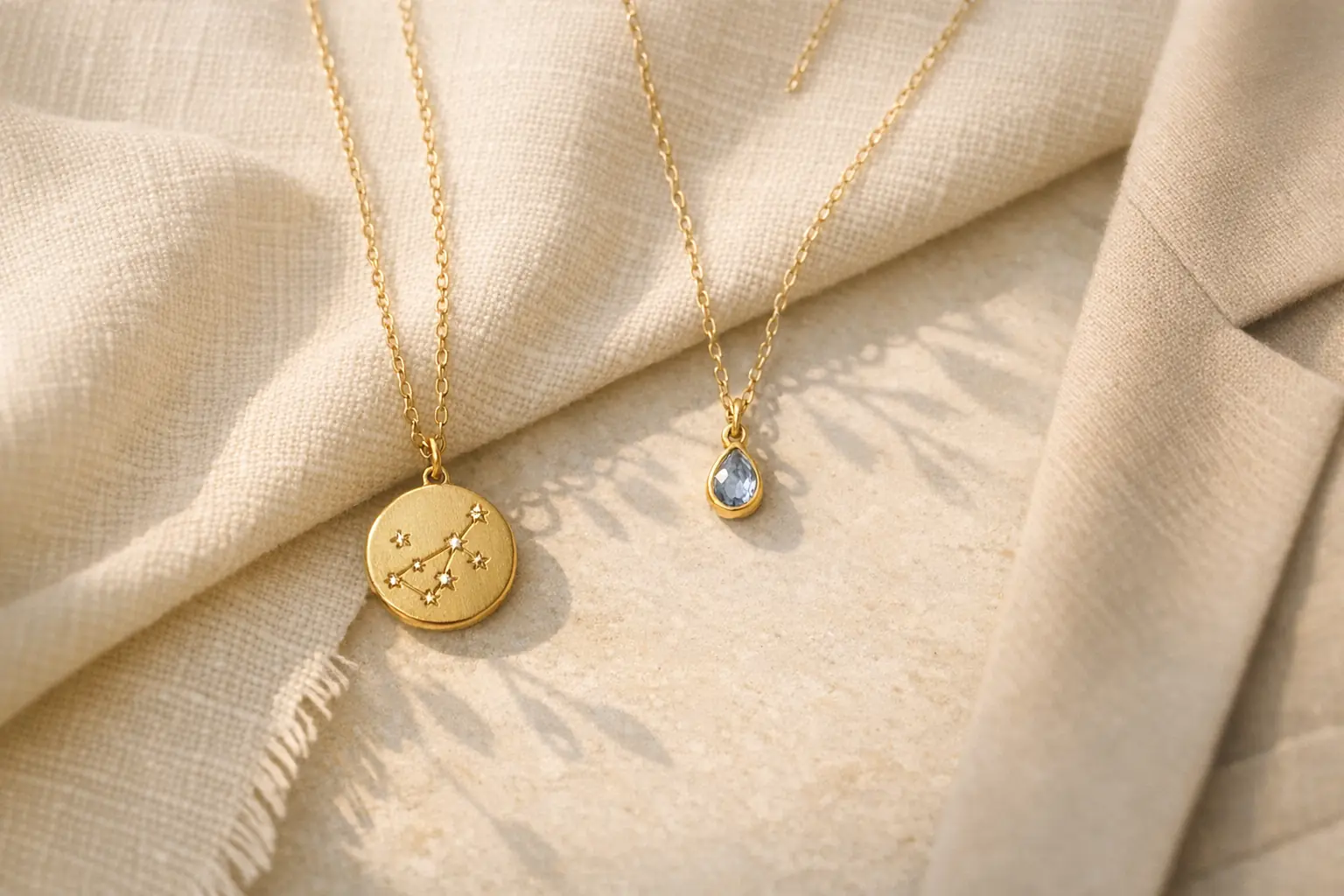
- Constellation designs feel celestial without making the symbolism immediately obvious.
- Illustrated zodiac figures create a stronger focal point and often suit larger medallions.
You don’t have to choose a symbol because a forecast says you should. If you associate Aries with courage, for example, an Aries motif might become your reminder to speak up in meetings. That’s a personal interpretation—not a prediction about your career.
Birthstones offer another route into meaningful jewellery. Choose your own birth month, a child’s stone or a gemstone connected to the month you reached a milestone. Birthstone lists vary across traditions, so there’s room to find an association that resonates with you.
Colour alone can also be meaningful. A green stone might remind you of a place where you felt settled; a blue one might recall a family keepsake. You don’t need to borrow a spiritual explanation when your own memory is enough.
Before buying, check whether the stone is natural, laboratory-grown, synthetic or an imitation such as glass. These descriptions affect what you’re purchasing and how you should care for it; they don’t determine how meaningful it can be.
Gemstones and zodiac symbols have rich associations in different traditions. It’s fine to enjoy those connections as beliefs or rituals, but jewellery should not be treated as a guarantee of protection, wealth, career success or better health. A pendant can remind you to take a thoughtful next step. It cannot take that step for you.
3. Make a milestone personal with engraving or an unexpected detail
An engraving turns a medallion into something that feels unmistakably yours—even when the front looks beautifully simple.
Dates and initials are classics, but they’re not your only options. Consider:
- A short word such as “steady,” “begin” or “enough.”
- Coordinates of a meaningful place.
- A tiny symbol from a shared memory.
- A phrase associated with someone who encouraged you.
- A date that marks a graduation, recovery milestone or new chapter.
For a work-friendly piece, engraving the reverse keeps the message close without making it public. It can be especially useful when your intention is private or still taking shape.
Keep the pendant’s dimensions in mind. A long quote may look appealing on a screen but become difficult to read on a small surface. Ask about character limits, lettering size and whether the design can be previewed. Also check return terms before personalising: engraved items may have different policies.
Found-object jewellery offers another kind of storytelling. A securely mounted beach-glass fragment, an inherited token or a small charm from an old keepsake can become the centre of a medallion-inspired piece. A jeweller can assess whether an object is suitable for mounting and everyday wear.
If you’re drawn to symbols from a cultural or spiritual tradition beyond your own, learn their context before choosing them. Understanding what a motif represents makes the connection more thoughtful than treating it as a generic “luck” accessory.
4. Get the size and layering right for everyday life
A meaningful pendant only becomes an everyday favourite if it’s comfortable to wear.
As a rough shopping guide, medallions around 12–18 mm across tend to look discreet, while 20–25 mm often make a noticeable everyday focal point. Pieces around 30 mm or larger usually feel more statement-making. Shape, thickness and weight can change that impression considerably.
Try cutting circles from paper in the listed dimensions and holding them against your usual neckline. It’s a quick way to check scale before ordering online.
Next, consider placement. Chain lengths sit differently depending on your neck size, build and clothing, so measure with a piece of string rather than relying solely on model photographs. Check that the chain and clasp are suitable for the pendant’s weight, too.
For layering, start with one medallion and one simpler chain. A length difference of roughly 5 cm can help create separation, although it won’t eliminate tangling. Let the meaningful piece remain the focal point rather than surrounding it with competing pendants.
If you often touch your jewellery while thinking, choose smooth edges and a comfortable weight. That small gesture may become part of your personal pause ritual, but it isn’t a treatment for anxiety.
Buying a birthstone keepsake for a child? Consider whether it’s better saved for later rather than worn now. Necklaces can pose strangulation risks, and small detachable parts can be choking hazards, especially for young children.
5. Look beyond the gold colour: materials, durability and sourcing
Personal meaning matters, but so does knowing what you’re paying for.
Solid gold, gold-filled jewellery, gold-plated sterling silver and gold-plated stainless steel are different constructions. A description such as “18K gold plated” identifies the purity of the gold coating, not the material throughout the piece.
Before buying, look for the base metal, coating method, plating thickness where available, and care instructions. Sterling silver can tarnish, copper can develop a patina, and plating can gradually wear away. Sweat, friction, swimming and exposure to cosmetics may affect the finish.
Rochas describes materials across its range that include gold plating, sterling silver and 316L stainless steel. Check the specific product listing rather than assuming every piece shares the same construction. Stainless steel is generally corrosion-resistant, but 316L contains nickel; “medical-grade” wording alone doesn’t guarantee suitability for someone with a metal allergy.
Treat “tarnish-free” and similar claims as prompts to read the details. What conditions are covered? Is there a finish warranty? Can the piece be replated? Gentle cleaning, dry storage and following the manufacturer’s care guidance can help preserve its appearance.
Apply the same curiosity to sustainability claims. If a piece is described as using recycled gold, ask whether that refers to the plating, the base metal or both—and what percentage is recycled. Look for clear supplier information or credible independent verification. Recycled-material claims and carbon-neutral operations describe different things; neither automatically proves every aspect of production is sustainable.
Ultimately, the right medallion balances meaning with wearability and clear product information. Choose a symbol you connect with, a construction that suits your routine and a price that feels comfortable. Let it mark your story—not promise to write your future.