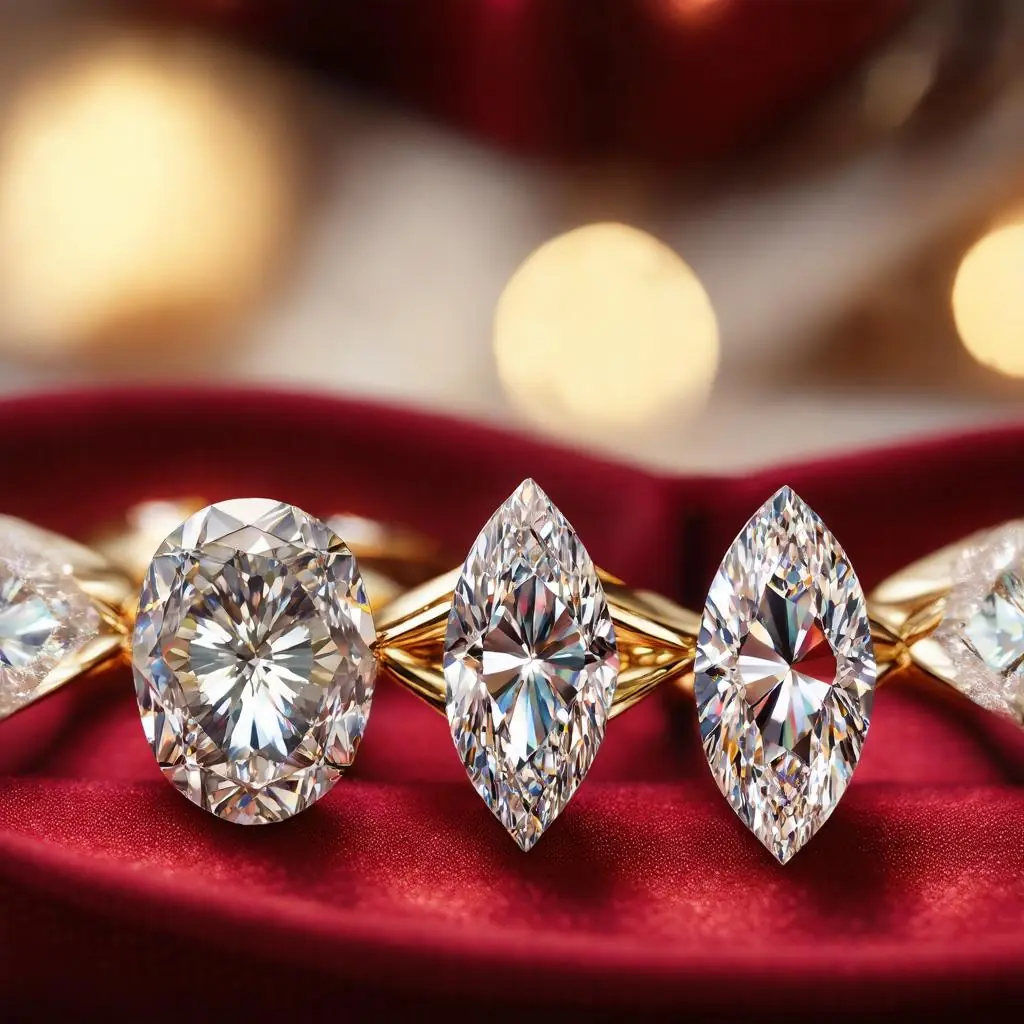
If you love a long, elegant silhouette, this is your season. Industry updates show a clear swing toward elongated fancy shapes—ovals, elongated cushions, emerald cuts, marquise, and pears are the darlings of Holiday 2024. Medium-to-short ratios (think “squarer” ovals or cushions) are slower to move, so you may find more options or friendlier prices there.
Here’s the quick pulse:
- Elongated shapes are in demand. They slim the finger, look larger for the weight, and photograph beautifully—perfect for proposal season and gift giving.
- Pointed shapes (marquise, pear, and even princess with those sharp corners) have tighter supply, which is supporting stronger pricing.
- Pillow-style shapes (square cushions and some rounder “pillow” profiles) are cooling, bringing more negotiating room.
- Well-cut fancy shapes are scarce and command a premium. Poorly cut stones are being discounted—sometimes steeply—because shoppers are more savvy about light performance and symmetry.
- Oversized stones are trading higher. If you’re hunting for 2 carats and up, expect stiffer competition and less room on price.
- Buyers are getting picky about clarity, especially dark inclusions you can see without a loupe. Eye-clean is king this year.
What that means for you: if you’re set on elongated or pointed shapes, act decisively when you spot a well-cut option. If you’re more flexible, you can score value by choosing less-hyped proportions (medium ratios) or by optimizing color/clarity rather than chasing carat alone.
Shape Ratios and Cut Quality—How to Read Them Like a Pro
Fancy shapes don’t receive a formal “cut grade” from most labs, so you’ll want to look at a mix of ratio, depth/table, symmetry, and real-life visuals.
1) Ratios people love right now
- Oval: 1.45–1.60 is the “long and lean” sweet spot; 1.30–1.40 is more classic and can be better value.
- Elongated cushion: 1.15–1.25 elongates without losing that cushion romance; squarer cushions (~1.00–1.05) are less in-demand but can be stunning.
- Emerald cut: 1.40–1.55 feels refined; 1.25–1.35 reads more rectangular than square and may be easier on the budget.
- Radiant: 1.20–1.35 is a versatile range for an elongated look with brilliant sparkle.
- Pear: 1.50–1.65 keeps a graceful outline; too squat can look stubby, too long can feel pointy.
- Marquise: 1.90–2.20 gives that elegant, vintage elongation without going “dagger.”
Use these as starting points, not rules. Some stones with “off-trend” ratios still face up beautifully and can be priced more attractively.
2) Cut cues that matter
- Light performance: Request 360° videos and see the stone under different lighting (daylight, spot, diffused). You’re looking for crisp on/off sparkle across the whole face, not just the center.
- Bow-tie in ovals/pears/marquise: A faint bow-tie can be charming; a dark, dead center band is not. Compare a few side by side.
- Symmetry and outline: Smooth, even curves and matching shoulders (for pears) help the stone read elegant and balanced.
- Depth and table: Extreme values can create leakage or a flat look. Stick to balanced proportions and trust your eyes (and video) over rigid numbers.
- For rounds: GIA/AGS top cut grades are a big help. For fancy shapes, rely on visuals plus light maps (ASET/Ideal-Scope) when available.
3) Why great fancy cuts cost more right now
Truly well-cut fancy shapes are rarer. Cutting for yield can leave stones bulky, leaky, or with heavy bow-ties. Stones that are trimmed to maximize brilliance (even at the expense of weight) are commanding a premium—especially in the trending elongated silhouettes.
Clarity That Affects Face-Up Beauty
Clarity is more than a grade on paper; it’s how clean the diamond looks to your naked eye in real life.
- Eye-clean vs loupe-clean: An SI1 that’s eye-clean can be a better buy than a VS1 with a tiny price-boosting “paper” upgrade you won’t see. But…
- Dark inclusions under the table: Black crystals, clusters, or a visible carbon spot can kill the sparkle and draw your eye. This is why buyers are avoiding low-clarity stones with obvious dark inclusions.
- Placement matters: Inclusions near the edge can often be hidden by a prong. Center-stage inclusions are harder to ignore.
- Step cuts reveal more: Emerald and Asscher have big open facets that spotlight inclusions. Consider VS2–VS1 (sometimes VVS for picky eyes) to keep them clean. Brilliant-style shapes (ovals, radiants, cushions, pears, marquise) can hide inclusions better, often allowing VS2–SI1 if eye-clean.
- Clouds and transparency: In lower clarities, large “clouds” can make a stone look hazy. Ask specifically about transparency and whether the stone looks “milky” in daylight.
- Fluorescence: Faint-to-medium blue can be a value play and sometimes makes near-colorless stones look whiter. If fluorescence is strong, ask for a daylight video to rule out any haziness.
Color note: Elongated shapes and step cuts can show color a bit more. In white metals, many shoppers like G–H for a bright look; in yellow/rose gold, I–J (even K for some) can look great and free up budget for size and cut.
Smart Buying Tips for Maximum Sparkle (and Value)
- Ask for multiple videos: Get close-ups and full-hand shots under different lighting. Compare stones side-by-side to judge bow-tie, brightness, and fire.
- Request light-performance data: ASET or Ideal-Scope images help you spot leakage vs balanced return. If not available, rely on clear, well-lit videos and high-res photos.
- Prioritize cut over carat: A cleanly cut 1.80 ct will usually out-dazzle a leaky 2.00 ct. Let your eyes, not the spreadsheet, be the final judge.
- Use setting to your advantage: Halos, thin bezels, and elongated shapes give big visual spread. A well-designed setting can make a smaller stone look like a size up.
- Be ratio-flexible: Slightly less elongated (or slightly more) can save hundreds to thousands with little difference on the hand.
- Balance color and clarity: For brilliant-style fancy shapes, aim VS2–SI1 if eye-clean, and put savings toward size or a better cut. For step cuts, stay a notch cleaner (VS2–VS1).
- Watch the “oversize” premium: Stones just over milestone weights (1.00, 1.50, 2.00 ct) cost more. Consider just under (0.90–0.99, 1.40–1.49, 1.80–1.99) for serious value.
- Check return and upgrade policies: Holiday buys should come with stress-free returns and future upgrade options.
- Consider lab-grown if size is the goal: Modern lab diamonds can offer spectacular looks for less. Put savings into a design you love or into higher cut quality.
- Mind your lifestyle: Pointed shapes are gorgeous but benefit from protective settings (bezel tips, V-prongs) and careful wear.
Shopping with a sustainability lens? Look for recycled metals and recyclable packaging. At Rochas Jewelry (1453 Fruitvale Ave, Oakland), we’re committed to eco-conscious practices—from recycled metals to recyclable packaging—so your gift feels as good as it looks. Our community has shared over 50,000 five-star reviews, and we keep pricing competitive with seasonal promotions. New here? Our Spring-style “FIRST” code typically gives 15% off first orders, and “BEST20OFF” takes 20% off ankle bracelets—handy if you’re bundling gifts across categories. Keep an eye out for holiday promos on fine jewelry, too.
Bottom line: Holiday 2024 is all about elongated elegance, clean optics, and smart, selective buying. Focus on how a diamond looks in motion, stay flexible on ratio and color, and prioritize cut. Do that, and you’ll unwrap sparkle that turns every room into your runway.