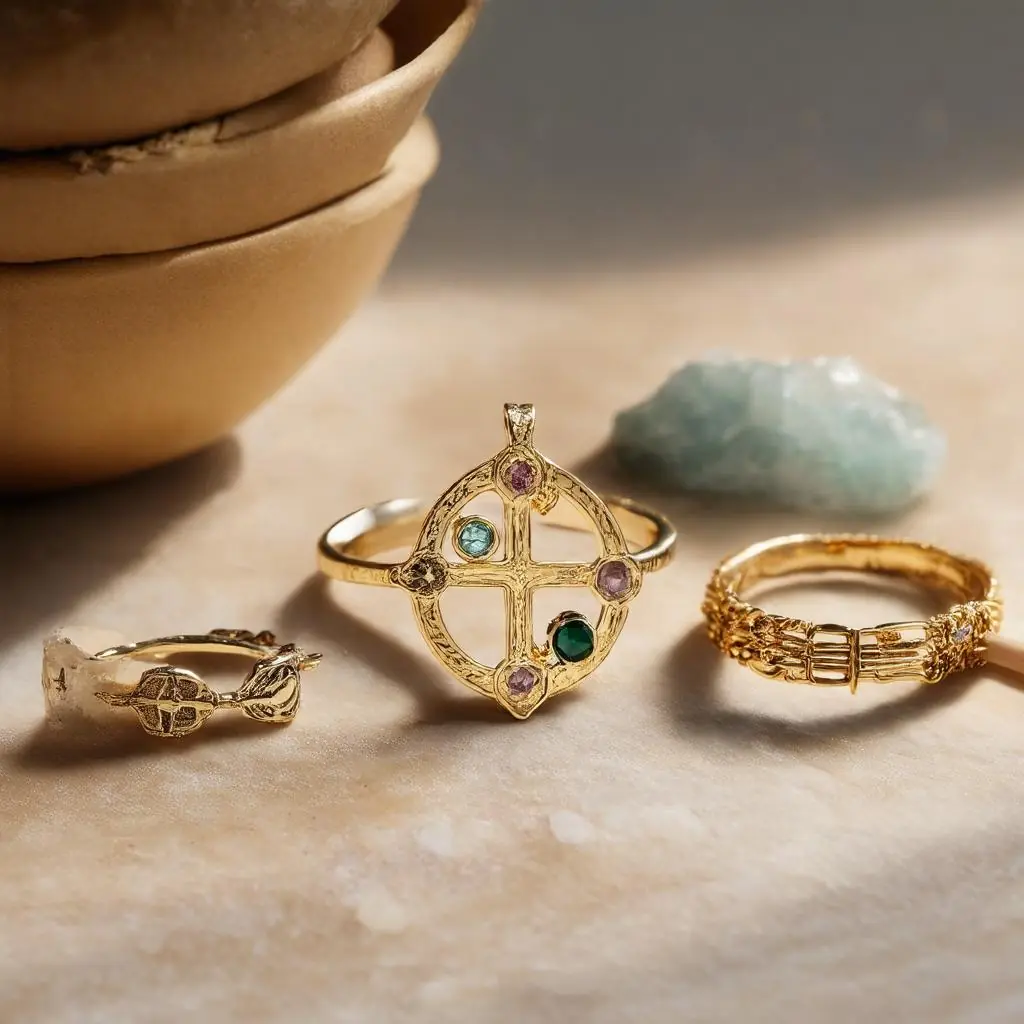
Conscious shoppers are rewriting the jewelry rulebook. Between now and 2033, ethical sourcing, supply‑chain transparency, and durability aren’t “nice to have”—they’re table stakes. Spiritually‑conscious professionals and self‑care advocates are choosing talismans that don’t just look good; they carry clean energy, last for years, and reflect the values of quiet luxury. Think zodiac signets you can wear in the boardroom and on your breathwork mat, birthstone wards for little ones, and fidget‑friendly amulets that calm nerves during a big pitch. The future of ritual jewelry is accessible luxury grounded in traceable materials, carbon awareness, and intention you can feel.
Stones That Align: Lab‑Grown vs. Mined (How to Evaluate)
Both lab‑grown and mined stones can be ethical choices—if you ask the right questions. Here’s how to assess each path with clarity.
-
Lab‑grown gems
- What they are: Real gemstones created in controlled environments using heat/pressure or vapor deposition—chemically and optically similar to mined stones.
- Pros: Highly traceable origin, fewer land and water impacts, often more affordable for larger carat looks (hello, everyday talisman wear). Consistency is great for minimalist stacking.
- Watch‑outs: Energy use can be high. Ask if the grower uses renewable power and whether the stone carries third‑party validation (e.g., IGI or GIA grading; SCS‑007 Certification for sustainability rated diamonds where applicable).
- Best for: Statement amulets, signet centers, and daily‑wear charms where you want serious sparkle without mined‑stone complexity.
-
Responsibly mined gems
- What they are: Natural stones extracted from the earth—think sapphires, birthstones, or heritage diamonds.
- Pros: Supports artisanal communities when sourced fairly; irreplaceable natural character; powerful for ritualists who feel drawn to earth‑born vibration.
- Watch‑outs: “Conflict‑free” alone isn’t enough. Look for supply‑chain documentation beyond the Kimberley Process. Ask for origin, mine‑to‑market details, and audits.
- What to look for: Fairmined or Fairtrade Gold labels for metals used alongside stones; RJC Code of Practices (CoP) and Chain of Custody (CoC) certifications for supply chains; gemstone traceability programs (e.g., Provenance Proof/track‑and‑trace); independent grading (GIA/AGL/IGI) for quality transparency.
- Best for: Birthstone talismans, heirloom‑energy pieces, or ritual jewelry where nature’s one‑of‑a‑kind patterns matter.
Bottom line: Choose the stone story that resonates with your energetic purpose, then verify the footprint with data. If you can’t get clear documentation, keep moving.
Metal Matters: Why Recycled Cores Extend Both Shine and Intention
Metals are the skeleton of your ritual piece. Recycled metals dramatically reduce environmental impact because they:
- Avoid new mining: Lower habitat disruption, water use, and tailings waste.
- Cut carbon: Refining recycled gold, silver, and copper requires far less energy than extracting virgin ore.
- Support circularity: Extends the useful life of precious resources already in circulation.
Smart construction details for daily wear:
- Recycled 18K gold plating over medical‑grade 316L stainless steel: Durable, hypoallergenic, tarnish‑resistant, and friendly to active, busy schedules.
- Gold‑plated sterling silver (vermeil level): Look for thicker plating—ideally 2.5 microns—and nickel‑free claims.
- PVD coating: A vacuum‑bonded finish that resists wear better than flash plating for pieces like fidget signets and everyday bangles.
- Oxidized copper accents: Beautiful patina with a grounded, earth‑element vibe when sealed properly to prevent rub‑off.
Transparency that matters for metals:
- RJC certification (Code of Practices; Chain of Custody) at the supplier level.
- Fairmined/Fairtrade credentials if using artisanal gold.
- Nickel‑free compliance and disclosures on heavy metals (lead/cadmium) per REACH/Prop 65.
- Carbon‑neutral operations or third‑party verified offsets; targets aligned with SBTi or similar climate frameworks.
Your Quick Wearability Checklist (Hypoallergenic, Tarnish‑Resistant, Ritual‑Ready)
Use this 90‑second checklist before you click “add to cart”:
-
Base and plating
- Medical‑grade 316L stainless steel core or sterling silver base.
- Gold plating that’s durable: 18K with 2.5 microns (vermeil) or PVD on steel for daily wear.
- Nickel‑free and lead/cadmium‑free disclosures.
-
Skin and sensitivity
- Hypoallergenic claim plus real specs (316L, titanium posts for earrings).
- Polished edges and smooth interiors for signet rings and fidget bands (less irritation).
-
Water, sweat, and tarnish
- PVD or thicker plating for pieces you’ll stack or touch often.
- Anti‑tarnish lacquer on silver, or simply stainless steel + gold plating for minimal upkeep.
- Clear care guidance from the brand (more on that below).
-
Craft quality
- Soldered jump rings, secure clasps, reinforced prongs or bezels for stones.
- Warranty or re‑plating/repair options—proof the brand stands behind wear.
-
Proof of ethics
- Recycled metal content stated (percentage if possible).
- Stone origin or lab‑grown disclosure with grading report references.
- Supplier standards: RJC CoP/CoC, Fairmined/Fairtrade (for gold), or lab‑grown sustainability certifications.
Care Rituals to Protect the Finish—and Your Intention
Your jewelry holds both materials and meaning. Treat both with respect and they’ll keep serving you—at work, in meditation, and everywhere in between.
-
Daily habits
- Last on, first off: Put your talismans on after skincare, fragrances, and hair products; remove before workouts, pools, or cleaning.
- Gentle cleanse: Wipe with a soft microfiber cloth after wear to remove oils and sweat. For deeper cleans, use mild, fragrance‑free soap and lukewarm water; pat dry.
- Safe storage: Separate pouches or a lined box to prevent scratches and tangling. Keep silica gel in the box if you live in humidity.
-
Energy‑clearing without damage
- Smoke‑free reset: Sound bath (singing bowl), a few intentional breaths, or a selenite charging plate—no residue, no chemicals.
- Moon moments: Place your piece near a window under the full or new moon to reconnect with your current goals. For sun‑sensitive stones, skip direct sunlight.
- One‑line mantra: Anchor your purpose each morning. Example: “I wear this to speak clearly and act with courage.”
-
Long‑term upkeep
- Re‑plating options: If you’re a heavy‑wear stacker, plan on professional re‑plating every 1–2 years for gold‑plated pieces.
- Quick inspections: Check prongs, bezels, and clasps quarterly—especially on fidget styles or kid talismans.
- Travel savvy: Use hard cases; avoid tossing talismans into your tote with keys or chargers.
Ask These Questions About Carbon Footprint and Packaging
Carbon and packaging are part of your talisman’s energetic hygiene. Before you buy, ask:
-
Carbon and energy
- Are operations carbon‑neutral or in the process of third‑party verification?
- What percentage of manufacturing energy is renewable?
- Do you measure cradle‑to‑gate footprint for metals/stones? Any published LCA or supplier data?
-
Logistics
- Carbon‑neutral shipping options?
- Regional manufacturing or batch production to reduce transport emissions?
-
Packaging
- Recycled or FSC‑certified paper boxes? Plastic‑free mailers? Soy‑ or water‑based inks?
- Reusable pouches for long‑term storage?
- Minimal filler and right‑sized boxes to cut waste?
Transparent answers signal a brand that respects both the planet and your practice.
A Simple Framework to Balance Ethics, Price, and Energetic Purpose
When you’re choosing a piece for daily ritual—whether it’s a zodiac signet for career courage, a birthstone for protection, or a discreet fidget necklace for calm—use this quick framework.
-
Step 1: Clarify the energetic job
- Name the intention in one sentence: “I’m calling in steady focus for a promotion” or “I’m protecting my child’s gentle heart.”
- Match the form to the function: signet ring for agency, pendant for heart‑centered protection, bracelet for steadying presence.
-
Step 2: Set your ethical baselines (non‑negotiables)
- Recycled metals as default.
- Verified stone story (lab‑grown with renewable energy or responsibly mined with traceability).
- Hypoallergenic build (316L/titanium posts; nickel‑free; durable plating).
- Basic climate/packaging commitments (carbon‑neutral ops or plan; FSC‑certified/recycled packaging).
-
Step 3: Choose your price tier with eyes open
- Good: Lab‑grown stones, recycled metal plating over 316L, PVD or 2.5‑micron vermeil, clear packaging policy.
- Better: Same as above plus supplier certifications (RJC CoP/CoC), longer warranty, re‑plating program.
- Best: Full traceability (origin reports or blockchain), Fairmined/Fairtrade metals where applicable, renewable‑powered labs, published footprint, repair for life.
-
Step 4: Score and decide
- Give 1–5 points for each pillar: Ethics, Price Fit, Energetic Alignment. Aim for 12+ overall.
- If a piece misses your non‑negotiables, it’s a no—no matter how pretty.
-
Step 5: Ritualize the purchase
- On arrival, cleanse, set your mantra, and calendar a monthly check‑in (new moon works beautifully) to realign purpose and do a quick clean.
Sustainable sparkle isn’t about perfection—it’s about clear choices that respect your values, your skin, and your intentions. When your talisman is built from recycled, hypoallergenic materials, sourced with transparency, and cared for with simple rituals, it becomes more than jewelry. It’s a daily companion that holds up—in every sense—through 2033 and beyond.