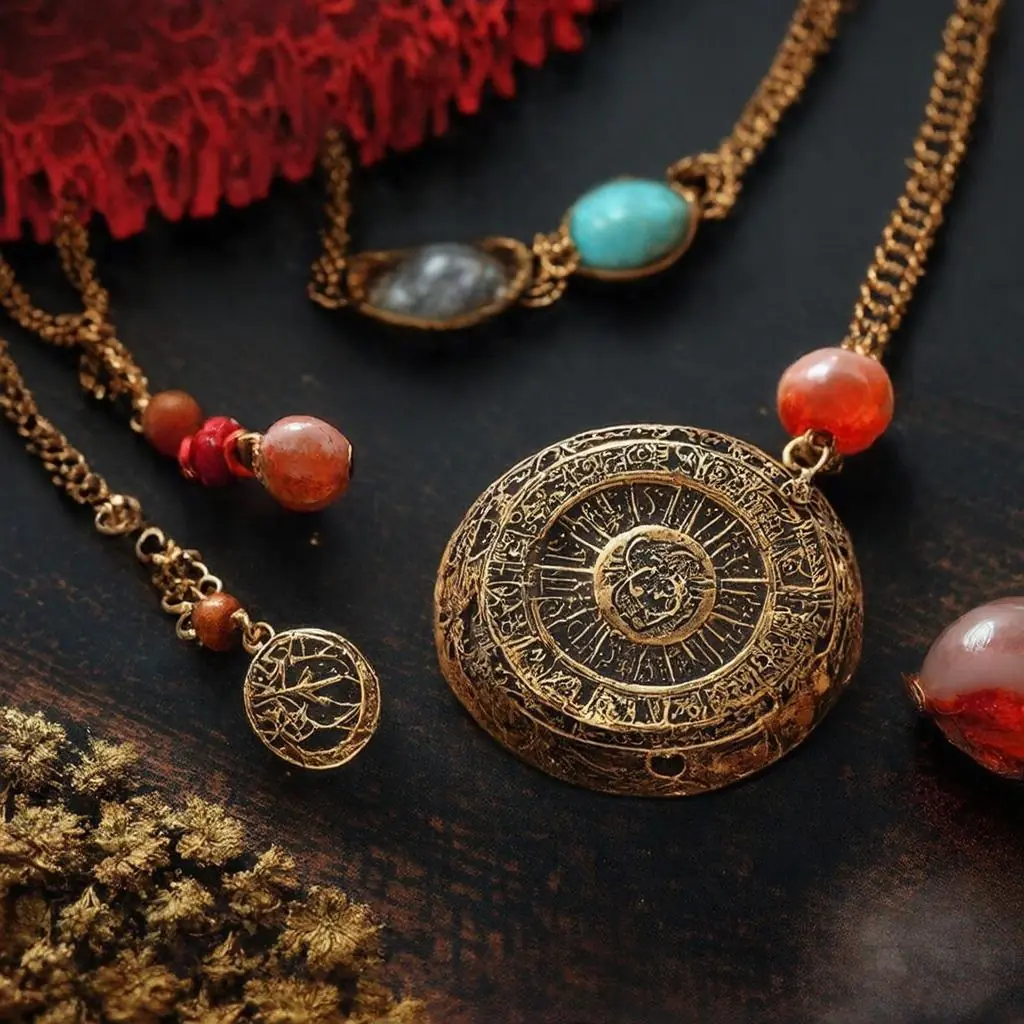
A new archaeological discovery is giving us a pretty powerful reminder that humans have always wanted more from what they wear. Researchers recently uncovered more than 1,000 prehistoric clay ornaments dating back roughly 12,000 to 15,000 years. These weren’t random scraps or purely decorative objects. They included geometric beads, plant-inspired shapes, and pieces covered with red pigment—details that suggest people were making jewelry to communicate something deeper about who they were, what they believed, and where they belonged.
That idea feels surprisingly familiar.
Even now, people rarely choose jewelry for looks alone. Yes, style matters. But so does meaning. A ring can represent protection. A necklace can feel grounding. A birthstone can carry memory. A zodiac piece can act like a personal reminder of identity, timing, and intention. Across thousands of years, the materials have changed, the craftsmanship has evolved, and the aesthetics have shifted—but the emotional reason for wearing symbolic jewelry has stayed incredibly consistent.
What makes this discovery even more interesting is the evidence that both children and adults helped create the beads. That points to jewelry-making as more than a craft. It may have been an intergenerational ritual, a shared activity where symbolic knowledge was taught, repeated, and preserved. In other words, jewelry may have helped early communities pass down values, stories, and social meaning long before anything was ever written down.
Why Ancient Beads Still Feel So Modern
When you look at these prehistoric ornaments through a modern lens, one thing stands out right away: humans have always used wearable objects to make the invisible visible.
Identity is invisible. Belonging is invisible. Intention, memory, grief, hope, love, protection—also invisible. Jewelry gives those things form.
That’s likely part of why these ancient beads mattered so much. The geometric patterns and plant-inspired forms were probably not accidental. Symbols help people recognize one another, express shared beliefs, or mark roles within a group. Red pigment may have added another layer of significance, possibly tied to life, vitality, ritual, or transformation. Even without knowing every exact meaning, the message is clear: these objects carried social and emotional weight.
And honestly, that hasn’t changed.
Today’s intention-driven jewelry works in much the same way. Zodiac rings, birthstone talismans, symbolic earrings, protective charms, and signet pieces all speak to the same human need. We want the things we wear to reflect something real about us. Maybe it’s our birth month. Maybe it’s a season of change. Maybe it’s a quiet personal ritual around confidence, healing, abundance, or emotional balance. Jewelry becomes personal when it stands for something beyond itself.
That’s why symbolic pieces keep resonating so deeply with modern wearers, especially people who want their purchases to feel more thoughtful and aligned. In a world full of fast trends and disposable accessories, meaningful jewelry offers something different: a sense of continuity, intention, and self-knowledge.
The Original Ritual: Making Meaning by Hand
One of the most moving parts of this discovery is the idea that children and adults may have made these ornaments together. That detail turns the story from archaeology into something deeply human.
It suggests that jewelry was not only worn in community—it was created in community too.
Imagine what that process might have looked like: hands shaping clay, repeating forms, applying pigment, learning which patterns mattered and why. The making itself may have been just as important as the finished object. It was a chance to teach, to connect, to share identity across generations. Jewelry, in that sense, was part art, part ritual, part memory system.
That still feels true today, just in a different form.
A lot of people now choose jewelry during meaningful life moments: a new job, a birthday, a relationship milestone, a fresh start, a healing period, or a moment when they want to call in luck, focus, or protection. The act of choosing a piece becomes its own kind of ritual. You’re not just buying an accessory—you’re selecting a symbol that matches your current chapter.
This is exactly why zodiac, birthstone, and talisman jewelry continues to feel so relevant. These pieces offer a personal language. A zodiac signet can affirm identity. A birthstone necklace can connect someone to family, childhood, or protection. A charm bracelet can mark goals and milestones over time. Even subtle, everyday pieces can hold a huge amount of emotional meaning for the person wearing them.
And for many modern consumers, especially those who lean toward quiet luxury and intentional living, that meaning matters more than logos ever could.
Why Symbolic Jewelry Still Matters Now
If 12,000-year-old beads can tell us anything, it’s that jewelry has always been tied to something bigger than appearance. People have long used wearable objects to navigate life—socially, emotionally, spiritually, and personally.
That’s a big reason symbolic jewelry still holds such a strong place in modern life. It gives people a way to carry intention with them. It can be bold and visible, or subtle and private. It can say, “this is who I am,” or just quietly remind the wearer, “this is what I’m calling in.”
That’s especially meaningful for today’s intentional consumer—the person who wants beauty, but also purpose. Someone who values ethical craftsmanship, lasting materials, and a deeper connection to what they wear is often looking for more than a trend. They want a piece that feels aligned with their values and their story.
Modern celestial and symbolic jewelry speaks directly to that need. Zodiac-inspired pieces connect personal identity with a broader cosmic framework. Birthstones add emotional depth and memory. Talismans and amulets offer a sense of grounding, protection, or aspiration. These aren’t just style choices. They’re wearable forms of self-expression that echo one of the oldest human instincts there is.
Seen this way, symbolic jewelry isn’t a niche trend at all. It’s part of a tradition that goes back to the very beginning of human social life. Ancient people used beads to express belonging, meaning, and connection. We still do the same thing now—we just use different metals, stones, and symbols.
A Very Old Tradition, Worn in a New Way
There’s something comforting about realizing that the desire to wear meaningful jewelry is not new, strange, or superficial. It’s ancient. Deeply ancient.
From prehistoric clay beads marked with pigment to modern signet rings, celestial earrings, birthstone talismans, and protective charms, the purpose has remained surprisingly steady. We wear symbols to remember who we are. We wear them to feel connected. We wear them to carry memory, intention, luck, love, and meaning through everyday life.
That’s what makes symbolic jewelry so lasting. It meets a basic human need—not just to adorn the body, but to express the self.
And maybe that’s the real lesson from these 12,000-year-old beads. Long before branding, fashion cycles, or luxury labels, people were already creating wearable meaning. They were making objects that said something about identity, ritual, and shared belief. They were teaching those symbols across generations. They were turning simple materials into something emotionally powerful.
So when someone reaches for a zodiac ring, a birthstone necklace, or a talisman meant to support confidence, protection, or abundance, they’re not following a passing trend. They’re participating in one of humanity’s oldest traditions: wearing what matters.