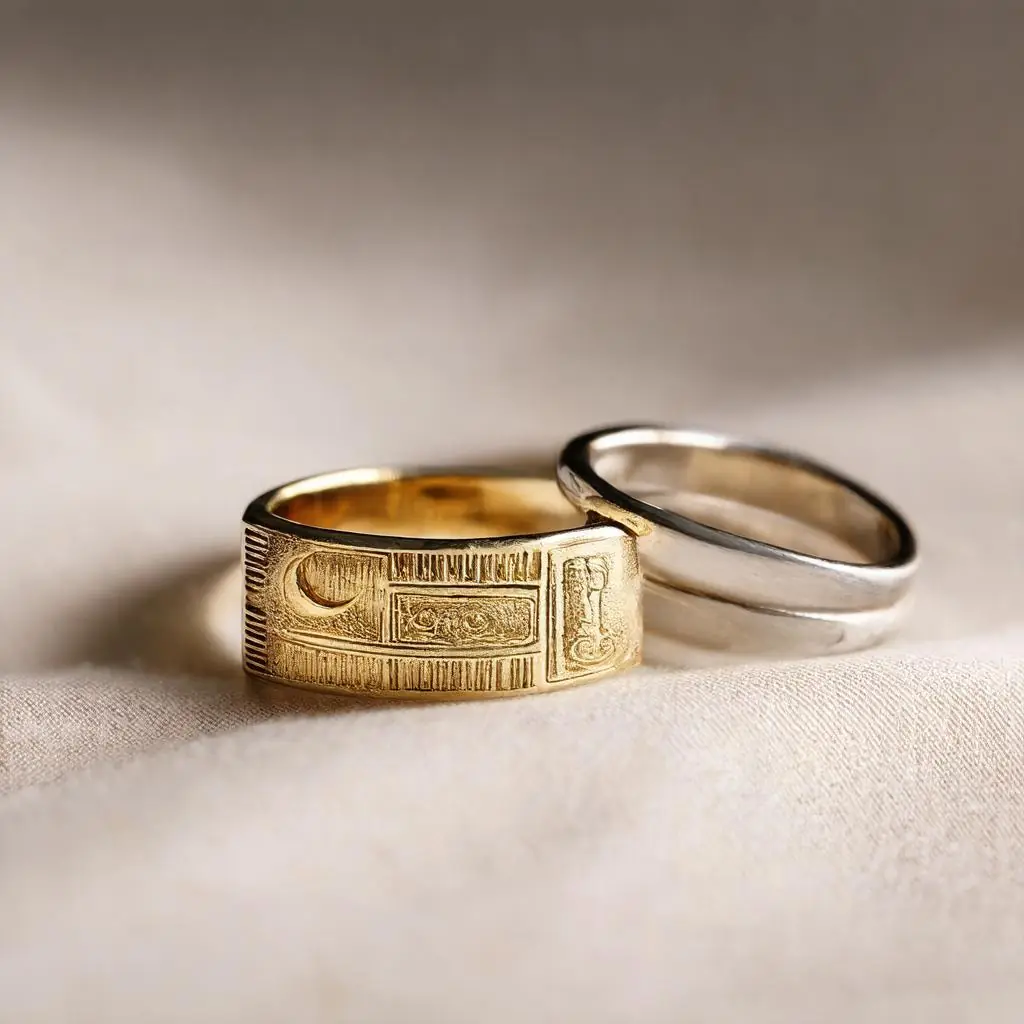
If you’ve ever run a fingertip over an old textile and felt like it was saying something, you’re not wrong. In Kazakh material culture, ornaments aren’t just decoration—they’re a living language. Patterns threaded across felt, leather, garments, saddles, yurts, and jewelry carry ideas as old as the steppe itself. Rooted in ancient philosophies like Tengriism (sky-centered wisdom that honors balance between people, land, and cosmos), these motifs once protected travelers, marked life passages, and whispered hopes for prosperity and well-being.
What’s inspiring about this language is that it evolves. Meanings have never been frozen in a museum case; they grow with the wearer. A motif chosen by a young rider centuries ago for protection might, on your wrist today, become a quiet promise of mindful balance at work, or a reminder to lead with courage. Modern intention jewelry doesn’t just borrow shapes—it invites you into a conversation with them, where your story matters as much as the symbol.
Let’s walk through the four classic ornament families and how their energies can translate beautifully into contemporary, wearable talismans—done with cultural respect, thoughtful materials, and rituals that keep your piece more than “just jewelry.”
The Four Families: Cosmological, Zoomorphic, Plant-Based, Geometric
Across Kazakh arts, motifs often fall into four broad groups. Each family historically holds an intention you can still feel when the pattern sits against your skin.
-
Cosmological (sky signs): Suns, moons, stars, and constellations reflect the rhythm of the heavens. Intention: protection and guidance—navigating life’s cycles with clarity. Think crescents that guard the night traveler or starbursts that signal hope.
-
Zoomorphic (animal signs): Horns, birds, and stylized creatures speak to vitality, movement, and the bond between human and herd. Intention: prosperity, strength, and forward momentum. Horn motifs can symbolize vigor and abundance; birds can call in wisdom and freedom.
-
Plant-Based (floral/foliate): Vines, buds, and blossoms are about flourishing life. Intention: well-being, growth, and the harmony of home. These motifs often soften edges—bringing balance to more dynamic symbols.
-
Geometric (structural): Meanders, triangles, spirals, and lattices are the grammar of the design language—order, continuity, and thresholds. Intention: balance and protection—boundaries that keep chaos out and energy aligned within.
None of these meanings are one-note. Across regions and families, interpretations vary, and artists weave multiple motifs to shape a fuller intention—like prosperity with ethical boundaries, or freedom with wise timing. That multiplicity is the magic.
Motif Spotlights: Meanings You Can Feel
Here are a few classic patterns—some names you’ll hear in Kazakh, others that come to us as descriptive translations—and how they can live on today as intention talismans.
-
Arkhar-muiz (argali horns): The sweeping horns of the wild argali sheep symbolize robust health and resilience. Historically, they echo a life lived in balance with the land—stamina, nourishment, and steady vitality. As a talisman, arkhar-muiz is a beautiful choice for well-being: a reminder to protect your energy, prioritize rest, and stay grounded while you grow.
-
Koshkhar-muiz (ram’s horns): This is the prosperity powerhouse—abundance, leadership, and fertile success. You’ll often see it flowing in mirrored pairs across textiles and carved wood. Context matters, though. Horns that dominate a piece can read as aggressive; placed thoughtfully (balanced with plant or geometric motifs), they channel confident growth rather than unchecked push. If you’re calling in career breakthroughs or wealth luck, consider koshkhar-muiz tempered by a grounding companion motif.
-
Kuskanat (bird, often wings or a stylized bird in motion): Frequently read as freedom, wisdom, and forward movement—the keen sight of a traveler who knows where the wind is going. As jewelry, kuskanat supports decisions, creative clarity, and fresh starts—an ally for those stepping into new roles or learning to trust their voice.
-
“Women’s Happiness” (a women’s fertility symbol): Often rendered as a stylized, symmetrical form evoking a woman’s body, home, and generative energy. Traditionally connected to fertility and maternal protection, it can also be worn today to honor cycles, creativity, and the joyful sovereignty of the feminine. If you’re inviting nurturing energy into your life—whether for family, projects, or self-care—this motif holds that compassionate, life-giving note.
A related, widely loved protective symbol worth noting is the triangular tumar amulet (often holding a prayer or blessing). Even if you don’t carry the original contents, its shape alone communicates safekeeping and mindful boundaries.
Think of motifs like words in a sentence. You might “say”: prosperity (koshkhar-muiz) with balanced growth (geometric meander), plus wise timing (kuskanat). Or you might “say”: well-being (arkhar-muiz) and feminine joy (Women’s Happiness) nested within a protective triangle (tumar). The syntax is creative, but always intentional.
From Pattern to Talisman: Modern Design That Respects the Source
Translating ancient ornaments into jewelry isn’t about copy-paste. It’s about honoring essence, simplifying forms, and crafting for real life—boardrooms, school pickups, meditation cushions, and everything in between.
Design pathways to consider:
-
Engraved signet rings and amulets: A clean signet face can hold a single motif (e.g., arkhar-muiz) or a paired composition (ram’s horns mirrored with a protective border). Deep engraving keeps the lines tactile for discreet fidgeting during stressful moments.
-
Talisman pendants: Triangular tumar-inspired pendants or circular medallions with kuskanat can ride high on the collarbone for daily intention. Add a subtle edge or hammered field to invite touch and focus.
-
Stackable bands: Minimal bands etched with repeating koshkhar-muiz or geometric meanders let you “stack intentions”—one for prosperity, one for balance, one for protection. Understated profiles suit quiet-luxury wardrobes and professional settings.
-
Intention-aligned birthstones and metals:
- Stones: Citrine or peridot for prosperity; lapis or sapphire for wisdom; malachite or jade for protection and well-being; moonstone for cycles and feminine flow. Select what resonates, not what a chart demands.
- Metals: Recycled 18K gold plating for abundance and creative warmth; sterling silver’s cool clarity for intuition; medical-grade 316L stainless steel for resilience and longevity (great for everyday, sweat-proof wear); oxidized copper for grounded, earthy energy.
-
Functional finish: Slightly raised reliefs and patterned interiors make perfect discreet fidget features—thumb a groove, trace a horn curl, breathe. If social anxiety nudges you in meetings, tactile surfaces can be a lifesaver without calling attention.
-
Personalization: Pair your Kazakh motif with your zodiac sign, birth month stone, or an engraved date that marks a turning point. Inside-shank inscriptions (“Prosper with purpose,” “Move with wisdom”) turn an external symbol into a private promise.
-
Sustainable craft: Honor a tradition of living lightly on the land by choosing carbon-neutral studios and durable, recycled metals that age well. Intention jewelry isn’t disposable; it’s the kind of piece you’ll still love when your goals evolve.
Cultural Respect Comes First
Symbols carry people. If you’re adapting Kazakh ornaments, slow down and do the work.
-
Research primary sources: Look for museum archives, academic texts, and ethnographic fieldwork from Central Asia. Compare variations across regions to avoid flattening complex traditions.
-
Consult tradition bearers: Collaborate with Kazakh artists, jewelers, and cultural advisors. Commission pattern references from living experts; compensate them fairly and credit their guidance.
-
Avoid sacred motifs without guidance: Some symbols—especially those tied to ritual textiles or clan identity—shouldn’t be lifted out of context. If a motif’s use is restricted, choose a related, respectful alternative.
-
Credit and educate: Name motifs (e.g., arkhar-muiz, koshkhar-muiz, kuskanat) in your product copy, share origins, and include a simple meaning card so wearers understand the story they’re carrying.
-
Design with care, not caricature: Simplify thoughtfully, keep proportions intentional, and avoid mashups that blur distinct symbols into trend graphics. Essence over novelty.
Cultural respect isn’t a checklist; it’s an ongoing relationship with source communities and with the symbols themselves.
Rituals to Activate Your Piece (New Moon, Full Moon, Everyday)
A talisman becomes yours when you give it a job. Here are simple, practical rituals to align symbol and intent—no elaborate setup required.
-
Choose your motif by goal:
- Prosperity: Koshkhar-muiz (ram’s horns), paired with citrine and warm gold tones. Add a geometric border for ethical boundaries around growth.
- Protection: Tumar-inspired triangle or a starry cosmological ring, set in sturdy 316L stainless or silver. Consider malachite or black onyx for a grounded edge.
- Mindful balance and well-being: Arkhar-muiz with a plant-based vine accent, in silver or oxidized copper. Moonstone or jade for a soft, steady heartbeat.
- Freedom and forward movement: Kuskanat with a slim meander (to remind you progress has a rhythm), maybe lapis for clear judgment.
-
New Moon intention-setting (begin): Clean your piece gently (soft cloth; avoid harsh chemicals on plated metals). Step outside or near a window. Hold the talisman, breathe for 60 seconds, and speak one sentence out loud: “I grow prosperity with integrity,” or “I move forward wisely.” Visualize the motif glowing; imagine its lines as a path you’re stepping onto.
-
Full Moon check-in (refine): Hold the piece and ask, “What shifted this cycle?” Journal a few lines. If something feels off, rebalance—add a stackable band with a geometric border for structure, or a plant-based accent for gentleness.
-
Daily micro-ritual (focus): When you feel stress, thumb the engraved line of your motif and inhale for a count of four, exhale for six. Mentally repeat your sentence once. The tactile cue ties your body back to your intention.
-
Care with consciousness: Take off plated pieces before swimming or heavy workouts. Store with the meaning card. If your goals change, re-dedicate the same piece; symbols are living companions, not one-time spells.
Remember: A talisman won’t do the work for you—but it will keep the work top-of-mind, syncing your thoughts, choices, and energy with your direction. That’s the quiet power of living symbols.
Kazakh ornaments invite us to wear history with humility and hope. Whether you choose the sure curve of arkhar-muiz for well-being, the balanced ambition of koshkhar-muiz for prosperity, the open sky of kuskanat for wise movement, or the tender strength of the Women’s Happiness motif, let your jewelry be more than beautiful. Let it be a conversation—between you and the steppe, between your present and your becoming. Choose with respect. Wear with intention. Grow with grace.