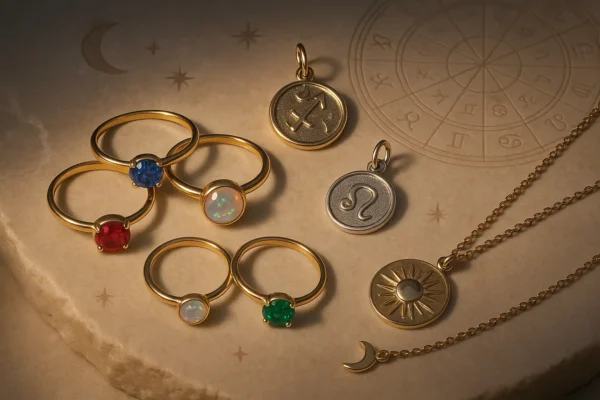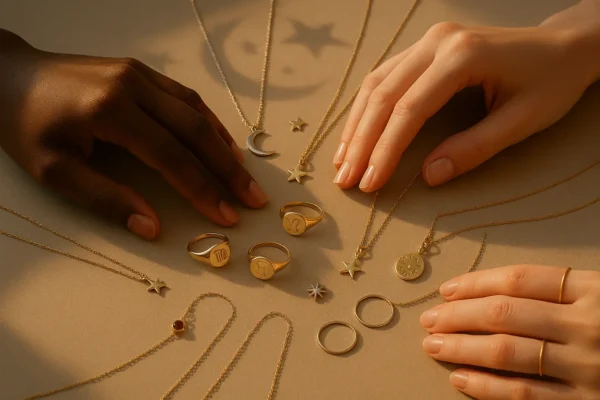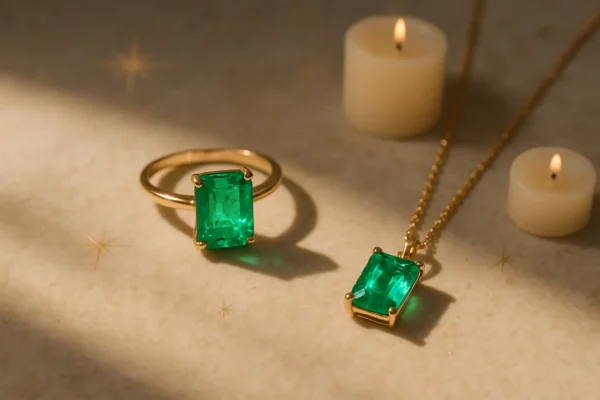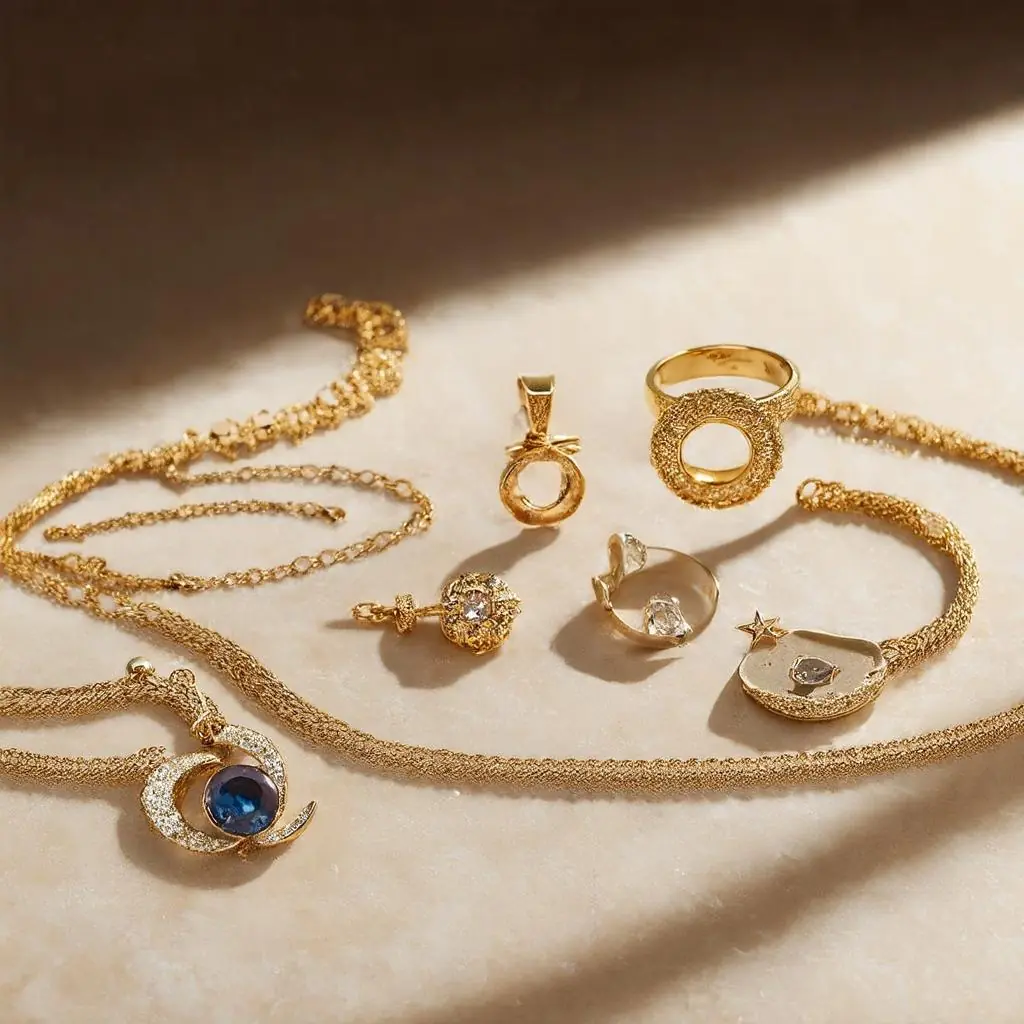
Celestial jewelry has always borrowed from the sky. Stars, suns, moons, arrows, eyes, scales, birthstones, zodiac signs, and protective motifs have been around for centuries, appearing in ancient amulets, family heirlooms, spiritual tools, and everyday adornment. So when a recent copyright dispute in the jewelry world raised the question of whether symbolic designs can be protected, it hit right at the center of what many jewelry lovers are shopping for now: meaning.
Here’s the simple version: common symbols themselves usually belong to everyone. A crescent moon, a sunburst, a zodiac sign, or a balance motif is not automatically “owned” by one designer. These images are part of shared visual language—spiritual, cultural, historical, and artistic.
But that does not mean every piece using those symbols is free to copy.
What may be protectable is the designer’s original expression: the specific way the symbols are combined, arranged, proportioned, textured, layered, engraved, or styled. A single star charm is common. But a very specific constellation layout paired with a unique talisman shape, custom engraving style, unusual stone placement, and recognizable design story may be more distinctive.
Think of it like astrology itself. Everyone has access to the same planets and signs, but your birth chart is unique because of the arrangement. Jewelry works in a similar way. The symbols may be universal, but the composition can be personal, original, and recognizable.
For buyers, this matters because celestial jewelry is not just “pretty.” It often carries intention: protection, confidence, wealth luck, grounding, career movement, healing, love, or remembrance. When you choose a symbolic piece, you are choosing more than a motif—you are choosing the thought behind it.
Why this matters in the zodiac and talisman jewelry boom
The market for zodiac, talisman, birthstone, and heirloom-inspired jewelry is growing fast. More people are moving away from loud logos and toward quiet luxury with meaning. They want jewelry that feels personal, wearable, ethical, and emotionally useful.
That is exactly why celestial pieces are everywhere right now. A moon pendant can feel calming. A sun charm can represent vitality. A birthstone can make a gift feel intimate. A signet ring can feel like a personal seal. A Dzi bead or wealth-luck-inspired bracelet can become part of a daily ritual. Even fidget jewelry has become meaningful for people who want discreet stress relief in professional or social settings.
But because these motifs are so popular, many brands pull from the same shared library of symbols. That can make the line between inspiration and imitation feel blurry.
For example, lots of designers may create:
- Zodiac necklaces
- Moon and star earrings
- Birthstone bracelets
- Evil eye or protection charms
- Balance-scale motifs
- Sunburst rings
- Arrow or compass pendants
- Spiritual stacking sets
None of those concepts are new by themselves. The real difference is in the execution.
A thoughtful brand will usually have a clear design language. You can see intention in the materials, proportions, finishing, stone choices, engraving, and how each piece fits into a bigger story. A less thoughtful copy may simply chase a trend: add a moon, add a star, call it “celestial,” and move on.
That is where buyers have power. You do not need to become a copyright expert. You just need to know how to spot jewelry that feels considered rather than generic.
How to recognize thoughtful symbolic craftsmanship
When shopping for celestial or ritual jewelry, especially pieces meant for self-expression, gifting, or daily intention-setting, look beyond the symbol itself. Ask: what makes this design feel complete?
A strong symbolic piece usually has a few layers working together.
First, look at the composition. Are the symbols arranged in a way that feels balanced and deliberate? A crescent moon placed with a tiny stone at its curve can feel very different from a moon randomly stamped onto a charm. A signet ring with a clean amulet-style face, subtle engraving, and protective stone detail has a stronger identity than a basic shape with a trendy icon.
Second, notice the styling. Is the jewelry minimalist, vintage-inspired, sculptural, bold, or delicate? Good design has a mood. For example, a Virgo-friendly minimalist stacking set should feel refined and practical, while an Aries-inspired “golden home” piece might lean warmer, brighter, and more confident. The symbol is only one part of the energy.
Third, check the materials. Meaningful jewelry should be made to last, especially if you plan to wear it as a daily ritual piece. Tarnish-prone, flimsy jewelry can quickly lose the feeling of value. Materials like recycled 18K gold plating, sterling silver, oxidized copper, and medical-grade 316L stainless steel can make a big difference for longevity and comfort.
Fourth, pay attention to the story. Does the brand explain why certain stones, shapes, or symbols belong together? A real talisman should feel like it has a purpose. Maybe it is designed around wealth luck, career breakthrough, grounding, protection, birth month energy, or emotional calm. The story does not need to be complicated, but it should feel authentic.
Finally, look for consistency. If a brand’s entire collection has a recognizable celestial language, that is a good sign. Rochas Jewelry, for example, leans into intention-driven pieces like amulet signet rings, birthstone talismans, zodiac-inspired designs, and symbolic jewelry for men, women, and kids. The point is not just to wear a symbol—it is to choose something that fits your personal ritual.
What buyers should take away from copyright disputes
A legal dispute over symbolic jewelry can sound like an industry problem, but it affects buyers too. When originality becomes harder to spot, shoppers can end up paying for pieces that look meaningful but were created with little thought.
So what should you do?
Start by remembering that shared symbols are not the issue. You do not need to avoid moons, stars, suns, zodiac signs, arrows, or protective motifs just because they are popular. These symbols are powerful because they are shared. They connect us to history, astrology, family, ritual, and self-expression.
Instead, look for pieces where the design feels intentional. A good celestial piece should answer at least one of these questions:
- What energy or intention does this piece support?
- Is the symbol arranged in a distinctive way?
- Do the materials match the purpose of daily wear?
- Does the piece feel personal enough for gifting or ritual use?
- Does the brand have a clear point of view?
- Is the craftsmanship strong enough to last beyond a trend?
This is especially important if you are buying jewelry as a gift. A birthstone protection bracelet for a child, a career talisman for a friend, or a zodiac necklace for a partner should feel chosen—not random. The best symbolic gifts carry a little message: “I see you. I know what matters to you.”
For self-care shoppers, the same idea applies. If your jewelry is part of your morning ritual, your meditation practice, your confidence routine, or your stress-management toolkit, it should feel good in both meaning and quality. A discreet fidget ring, a grounding bracelet, or a charm linked to wealth luck or protection can be beautiful and functional at the same time.
And yes, price still matters. Accessible luxury is part of why symbolic jewelry is so appealing. You should not have to spend a fortune to wear something meaningful. The sweet spot is finding pieces that balance affordable pricing with durable materials, ethical production, and a strong design story.
Copyright disputes may continue as celestial jewelry grows, because brands are working with symbols that belong to all of us. But for buyers, the bigger lesson is simple: do not shop only for the icon. Shop for the intention, the arrangement, the craftsmanship, and the vision behind it.
A star may be common. A moon may be ancient. A zodiac sign may be universal. But the right piece—made with care, worn with purpose, and chosen for your personal path—can still feel completely your own.