Symbolic jewelry has always been more than decoration. Long before “intentional accessories” became a thing, people wore rings, lockets, brooches, and beads to carry memory, protection, devotion, and identity close to the body. One of the most powerful examples is Victorian mourning jewelry: dark, quiet, emotionally loaded pieces created to honor someone who had passed.
In the 19th century, mourning jewelry was part of a much bigger grief ritual. People wore black clothing, followed social rules around mourning periods, and chose jewelry made with materials like jet, onyx, black enamel, hairwork, and oxidized metals. Some pieces were delicate and sentimental, like lockets holding a tiny portrait or a braided lock of hair. Others were more direct, including coffin-shaped rings, skull motifs, and inscriptions that reminded the wearer of mortality, love, and remembrance.
Today, most of us are not trying to recreate Victorian mourning customs exactly. We do not need rigid grief rules or jewelry that announces loss in a literal way. But the emotional purpose behind those pieces still feels deeply relevant. Modern wearers want jewelry that means something. They want pieces that help them feel grounded during transition, protected during stressful seasons, or connected to a person, place, chapter, or version of themselves they are not ready to forget.
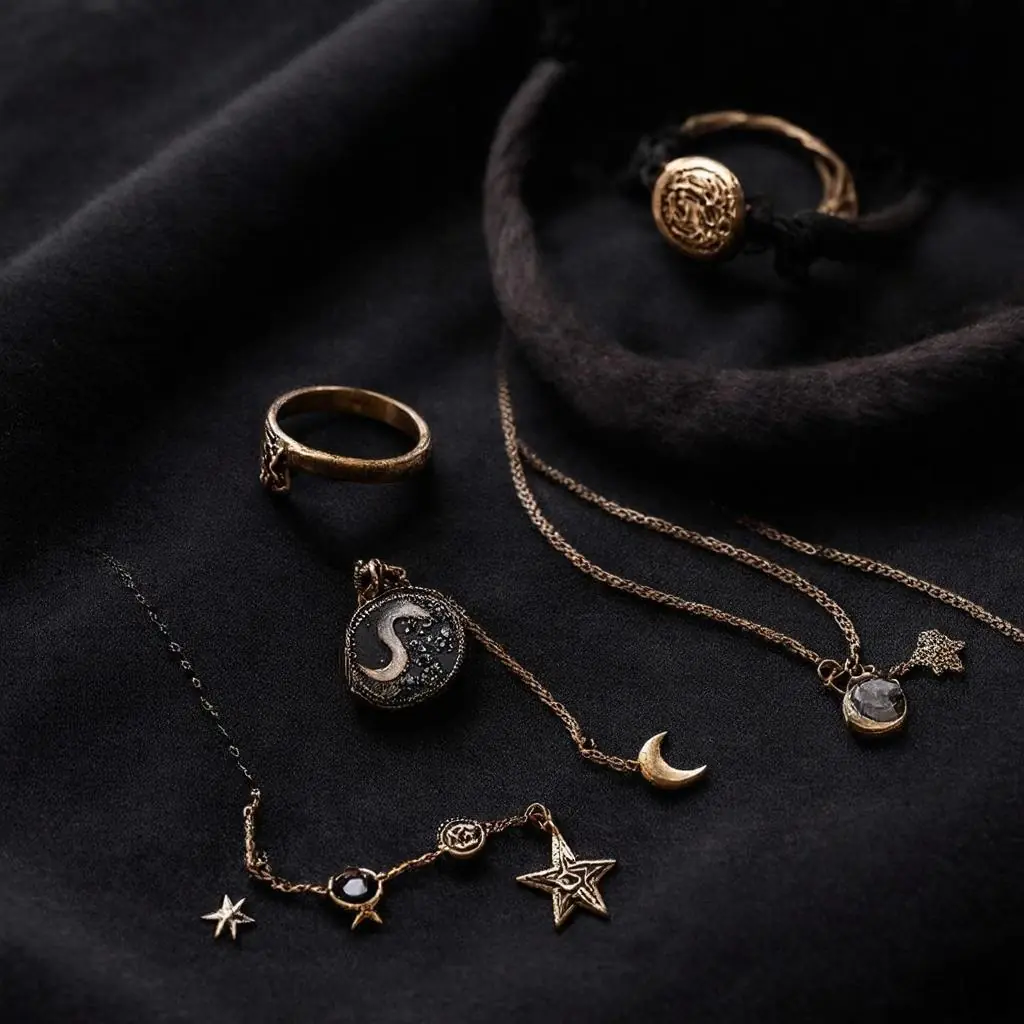
That is why mourning-inspired jewelry is returning, but in a softer, more wearable form. The mood is still dark, symbolic, and soulful, but the design language has shifted. Think oxidized finishes instead of heavy black enamel, subtle coffin-like silhouettes instead of costume-goth replicas, braided textures instead of actual hairwork, and low-shine metals that feel intimate rather than flashy.
For spiritually conscious professionals, self-care advocates, and anyone drawn to quiet luxury with personal meaning, this return makes sense. A ring or pendant can be beautiful, yes, but it can also become a daily ritual object: something you touch before a big meeting, wear when you need courage, or keep close when you are moving through grief, change, or healing.
2. The old symbols, reimagined for everyday wear
Victorian mourning jewelry was filled with visual codes. Black represented grief, dignity, and emotional depth. Braided textures symbolized connection and continuity. Coffin forms pointed to mortality and remembrance. Matte or low-shine surfaces created a restrained look that matched the seriousness of mourning.
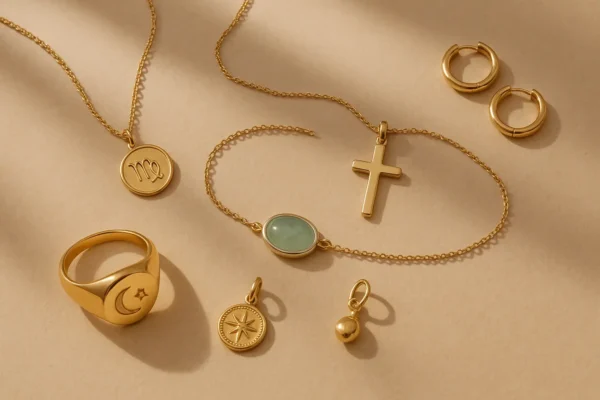
Modern symbolic jewelry borrows from these codes without copying them too literally. Instead of wearing a traditional coffin ring as a direct mourning statement, someone might choose a slim black signet, an oxidized band, or an amulet ring with a protective shape. Instead of a large mourning brooch, they might wear a small talisman pendant with a birthstone, zodiac symbol, moon phase, or engraved initial.
This is where contemporary pieces become especially personal. A blackened finish can represent protection, mystery, or emotional boundaries. An oxidized copper or dark stainless steel surface can feel grounding, almost like armor. A braided texture can symbolize bonds that continue even when life changes. A low-shine finish can create that “unbranded quiet luxury” feeling: subtle, intentional, and not trying too hard.
The gothic influence is still there, but it is cleaner now. Less theatrical, more wearable. Instead of looking like something pulled from a museum case, modern memory talismans are designed to work with everyday life: office outfits, layered necklaces, minimalist stacks, black denim, soft knits, even a simple white tee.
That balance matters. A piece can hold heavy meaning without looking heavy. A ring can honor grief without making every conversation about loss. A necklace can mark transformation without screaming for attention. For many people, the best symbolic jewelry is private. It is something you know, something you feel, something that becomes part of your daily rhythm.
This is also why materials matter so much. Modern wearers want pieces that last, especially when the jewelry is tied to memory or protection. Durable options like medical-grade 316L stainless steel, gold-plated sterling silver, recycled 18K gold plating, oxidized copper, and tarnish-resistant finishes make symbolic jewelry easier to wear every day. If a talisman is meant to support you through real life, it should be able to handle real life too.
3. From grief objects to transformation talismans
One of the biggest shifts from Victorian mourning jewelry to today’s symbolic jewelry is the meaning of “memory.” In the past, mourning jewelry was often tied specifically to death and bereavement. Now, memory talismans can honor many kinds of emotional transitions.
They can represent a loved one, of course. But they can also mark the end of a relationship, the start of sobriety, a career leap, a move to a new city, a spiritual awakening, or the version of yourself you had to leave behind to become who you are now.
That is why dark and symbolic jewelry feels so current. We are living in a time where people want their accessories to serve a purpose. Not just “does this match my outfit?” but “does this support the energy I am stepping into?” A signet ring can become a confidence anchor. A black pendant can become a protection piece. A birthstone charm can become a family connection. A zodiac amulet can become a reminder of your strengths, timing, and personal cycle.
Rochas Jewelry’s “Personalized Prescription” approach fits naturally into this shift. Instead of treating jewelry as random decoration, the idea is to choose pieces based on intention: grounding, remembrance, protection, wealth luck, career breakthrough, emotional clarity, or self-trust. That is very close to the original spirit of mourning jewelry, but translated for modern life.
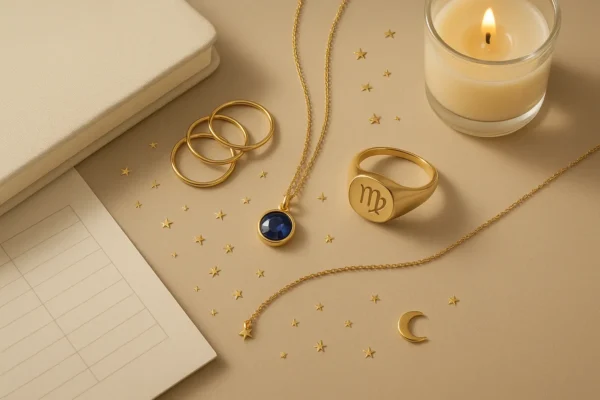
For example, someone drawn to Aries “Golden Home” energy might choose a warm-toned amulet or signet that feels like personal power and emotional security. A Virgo may lean into minimalist stacking: slim rings, low-shine textures, and clean symbolic details that feel organized, calming, and quietly protective. Someone navigating social anxiety might be drawn to discreet fidget jewelry, where the piece is not only meaningful but functional—a small grounding tool worn on the hand.
The point is not to pretend jewelry magically fixes everything. It is more human than that. Symbolic jewelry works because we give it meaning. We create a ritual around it. We wear it when we need to remember who we are, what we have survived, and what we are calling in next.
In that sense, a modern memory talisman is not about staying in grief. It is about carrying memory forward without being trapped by it.
4. How to wear dark symbolic jewelry now
If you are curious about the mourning-jewelry revival but do not want to look like you are wearing a period costume, the trick is to keep the styling intentional and balanced.
Start with one anchor piece. This could be an oxidized ring, a black stone pendant, a celestial charm, a braided-texture band, or a low-shine cuff. Let that piece carry the mood, then keep the rest of your jewelry simple. A dark signet with a fine chain. A blackened pendant with small hoops. A textured ring stacked beside a clean gold band. That mix keeps the look modern.
You can also use contrast. Dark symbolic jewelry looks beautiful against soft, everyday materials: cotton, linen, silk, denim, cashmere, or a crisp blazer. The contrast makes the piece feel personal and elevated rather than overly gothic.
For a more spiritual approach, choose by intention:
- For memory: initials, birthstones, lockets, or small charms tied to a person or chapter of life
- For protection: black finishes, evil eye motifs, Dzi bead-inspired pieces, amulet shapes, or closed circular forms
- For transformation: snakes, moons, stars, oxidized metals, or pieces with light/dark contrast
- For grounding: low-shine rings, fidget-friendly textures, heavier chains, or tactile braided surfaces
- For quiet confidence: signet rings, minimalist stacks, and clean celestial symbols
The best part is that symbolic jewelry does not have to be expensive to feel meaningful. Accessible luxury makes sense here because intention should not be limited to collectors or luxury buyers. A durable, thoughtfully chosen bracelet or ring can become just as emotionally important as a high-ticket heirloom. What matters is the connection, the craftsmanship, and whether the piece can stay with you through daily wear.
Rochas Jewelry leans into that balance with celestial and symbolic pieces designed for modern rituals: wearable, durable, and personal without being overly loud. Whether it is a birthstone protection piece for a child, a zodiac ring for self-trust, a dark-toned amulet for emotional grounding, or a subtle bracelet chosen for a “new chapter” moment, the idea is the same: jewelry can hold meaning without needing to explain itself to everyone.
And that may be why the mourning-jewelry influence feels so powerful again. In a world that moves fast and often asks us to “get over” things quickly, memory talismans give us permission to carry what matters. Not in a heavy way. Not in a stuck way. But in a grounded, beautiful, wearable way.
The Victorian era gave us jewelry as remembrance. Today, we are turning that idea into jewelry for healing, protection, transformation, and quiet strength. Dark finishes, braided textures, oxidized metals, and symbolic shapes are not just aesthetic choices. They are little reminders that beauty can come from depth, and that what we have loved, lost, learned, and survived can become part of how we adorn ourselves moving forward.