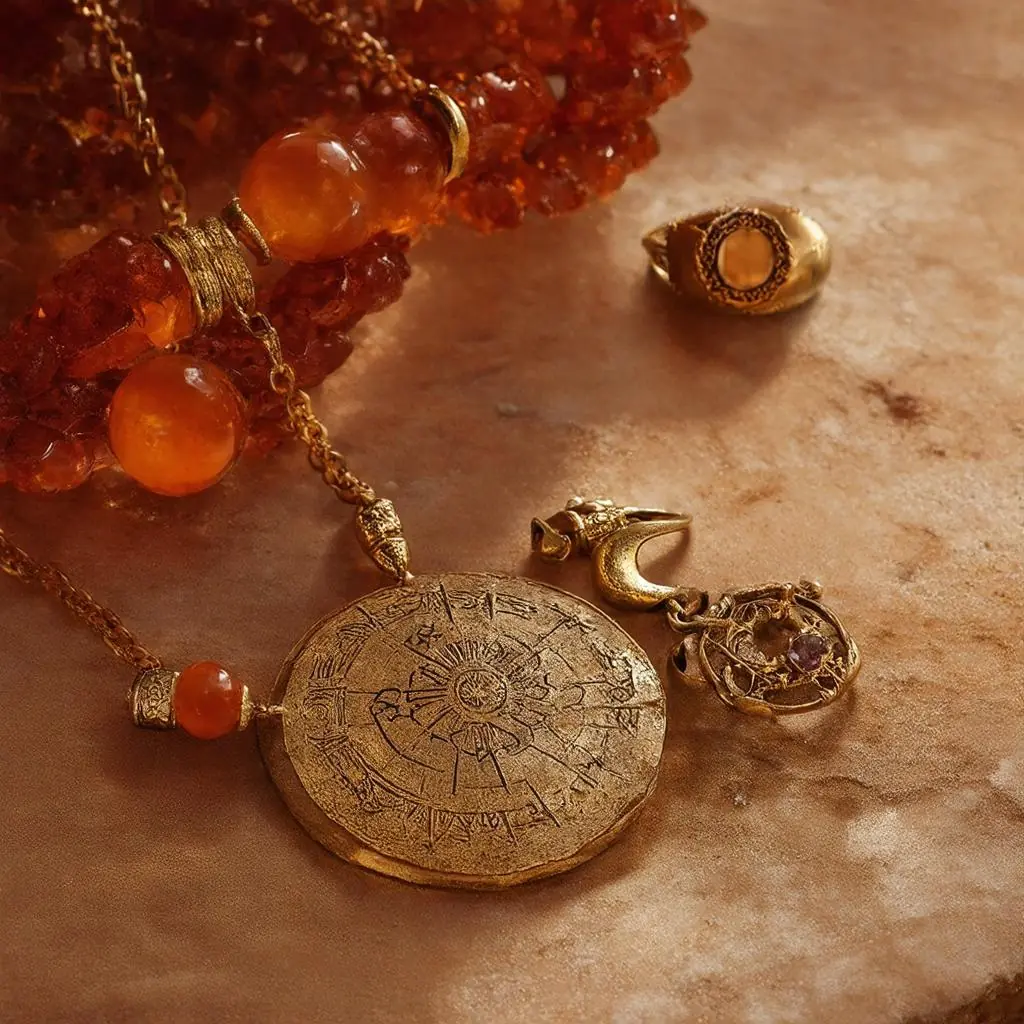
A newly reported Bronze Age jewelry discovery from a Greek island is a beautiful reminder that meaningful adornment has been part of human life for thousands of years. The find includes gold pendants, beads, delicate gold-sheet ornaments, and carnelian elements that may once have belonged to a single necklace or suspended decorative piece. Researchers believe the jewelry was likely connected to a high-status wearer and may have carried cultural, personal, ritual, or funerary meaning.
In other words: even 3,500 years ago, people were not simply wearing pretty objects.
They were wearing identity. Status. Protection. Memory. Belonging. Power.
That is what makes this discovery so fascinating. The materials themselves tell a story. Gold was rare, radiant, and difficult to obtain. Carnelian, with its warm red-orange glow, has long been associated with vitality, courage, and life force across many ancient cultures. These were not random decorative choices. They were materials selected for impact, presence, and meaning.
And honestly? That part feels surprisingly modern.
Today, we may not be walking through Bronze Age palaces or island settlements, but we still reach for jewelry when we want to feel more like ourselves. We wear a birthstone because it connects us to our month, our family, or our child. We wear a zodiac pendant because it reflects our personality, our timing, or the energy we want to call in. We wear a signet ring, talisman, charm, or bracelet because it helps us carry an intention into the day.
The tools have changed. The instinct has not.
Gold, carnelian, and the language of personal power
One of the most interesting parts of this ancient find is the combination of gold and carnelian. These materials still feel powerful in jewelry design today, and that is not an accident.
Gold has always had a unique emotional pull. It catches light in a way that feels almost solar. It suggests warmth, abundance, permanence, and celebration. Across cultures and centuries, gold has been used for crowns, amulets, wedding bands, sacred objects, heirlooms, and protective symbols. It has a way of turning a small object into something that feels important.
Carnelian has its own kind of magic. Its fiery color sits somewhere between earth and flame. Ancient wearers may have valued it for beauty, rarity, or symbolic strength. Modern jewelry lovers are often drawn to carnelian for confidence, creativity, motivation, and grounding energy. Whether you view stones spiritually, aesthetically, or historically, carnelian has the kind of presence that makes a piece feel alive.
That is the timeless power of symbolic adornment: the material matters because the meaning matters.
A gold pendant is not only a gold pendant when it represents courage. A red stone is not only a red stone when it reminds you to speak up, start over, or protect your peace. A necklace is not only an accessory when it was chosen for a moment, a transition, a goal, or a loved one.
This is why ancient jewelry discoveries continue to inspire modern design. They remind us that jewelry has always lived at the intersection of beauty and belief.
From Bronze Age status symbols to modern intention pieces
The Bronze Age jewelry set likely belonged to someone important, or at least someone whose adornment communicated importance. In ancient societies, jewelry could show rank, wealth, family connection, trade access, or spiritual role. The fact that the pieces may reflect long-distance trade and cultural exchange makes them even more meaningful. They were not isolated objects. They were part of a larger world of movement, contact, and shared symbolism.
That is another connection to today.
Modern meaningful jewelry also helps us communicate who we are and what we value. But status is no longer only about showing wealth. For many intentional consumers, it is about alignment.
People are choosing pieces that feel personal rather than loud. Quiet luxury instead of obvious branding. Sustainable materials instead of disposable trends. Jewelry that supports a ritual, a mood, a goal, or a season of life.
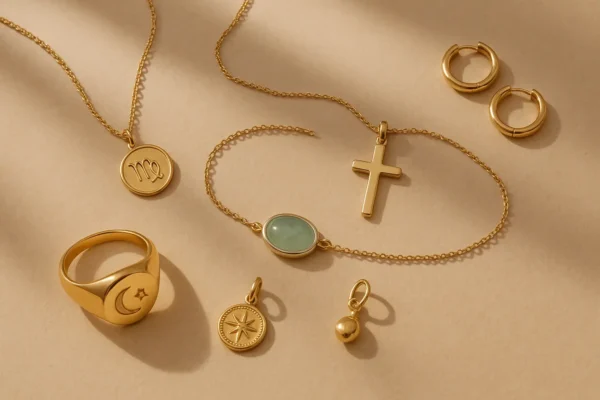
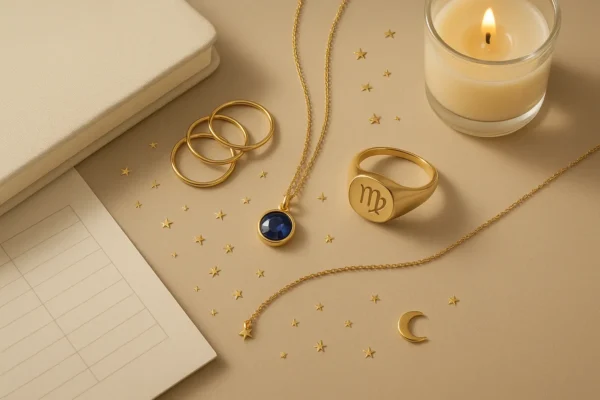
That is why celestial and symbolic jewelry feels so relevant right now. A zodiac signet ring can become a daily reminder of your strengths. A birthstone talisman can carry family meaning or self-care energy. A moon charm can mark a new beginning. A Dzi bead or wealth-luck bracelet can symbolize protection, focus, and career breakthrough. Even a small stacking ring can become part of a morning ritual: put it on, set the intention, move through the day with purpose.
This is not about pretending jewelry can solve everything. It is about recognizing how powerful physical reminders can be.
We all have days when we need something to anchor us. Something subtle that says, “Remember who you are.” That might be a necklace tucked under a shirt before a big meeting, a bracelet worn during a difficult conversation, or a ring that keeps anxious hands busy while still looking polished.
Ancient people understood that adornment could hold meaning beyond the visible. We are still doing the same thing, just in modern form.
Why meaningful jewelry still belongs in everyday life
Archaeological finds like this Greek island discovery matter because they help us see jewelry differently. They pull us out of the mindset that adornment is superficial. Instead, they show us that jewelry has always been part of how humans tell stories.
A 3,500-year-old gold ornament can tell us about trade routes, craftsmanship, social identity, ritual practices, and emotional values. A modern birthstone necklace can tell a story about a child, a birthday, a healing journey, or a fresh start. A celestial pendant can connect someone to timing, intuition, and the night sky. A signet ring can represent self-definition. A bracelet can become a quiet symbol of protection, luck, or resilience.
That continuity is powerful.
At Rochas Jewelry, this is exactly why symbolic adornment feels so central. The appeal is not only in how a piece looks, but in what it helps you carry. Gold-plated finishes, stainless steel, sterling silver, carnelian-inspired tones, zodiac motifs, birthstones, and amulet shapes all belong to a much older human tradition: choosing beauty with purpose.
And meaningful jewelry does not have to be unreachable. The modern version of “precious” can be accessible, durable, ethical, and personal. It can be a piece you wear every day, not something locked away. It can be carbon-conscious, tarnish-resistant, and designed for real routines. It can be luxurious without shouting. Spiritual without feeling costume-like. Personal without needing explanation.
That is the real lesson of the Bronze Age find.
Jewelry lasts because meaning lasts.
Trends change. Civilizations rise and fall. Materials travel. Symbols evolve. But people keep reaching for adornment when they want to mark identity, invite protection, honor beauty, or feel connected to something bigger than themselves.
A gold pendant from 3,500 years ago and a zodiac talisman worn today may seem worlds apart. But both answer the same human desire: to carry a story on the body.
And that is why symbolic jewelry will never really go out of style.