Sometimes the jewelry you reach for before a big day isn’t your most expensive piece. It’s the one that reminds you who you are—or who you’re becoming.
Insect-inspired jewelry has held that kind of appeal for centuries. A beetle, bee, or butterfly turns something familiar from nature into a personal symbol. These creatures build, adapt, and move through remarkable life cycles, giving us plenty of ways to connect their stories with our own.
Across different cultures and periods, insect motifs have appeared in sacred amulets, decorative ornaments, and wearable art. Their meanings haven’t stayed fixed, though. An ancient Egyptian scarab carried religious associations that differ from the meaning someone might give a beetle pendant today. Understanding that history makes a piece more interesting without requiring you to adopt the beliefs behind it.
For Rochas Jewelry’s intention-led approach, that distinction matters. A talisman can be an object you choose to represent a goal, value, or turning point. It doesn’t need to promise supernatural results to feel significant.
Think of it as a small, wearable prompt: begin again, keep showing up, or give yourself permission to change.
2. Scarabs, Bees, and Butterflies: Finding Your Symbol
Each of these creatures offers a different starting point for personal intention. The best choice isn’t necessarily the one associated with your zodiac sign or the latest trend. It’s the one whose story feels useful to you right now.
The scarab: renewal and a new beginning
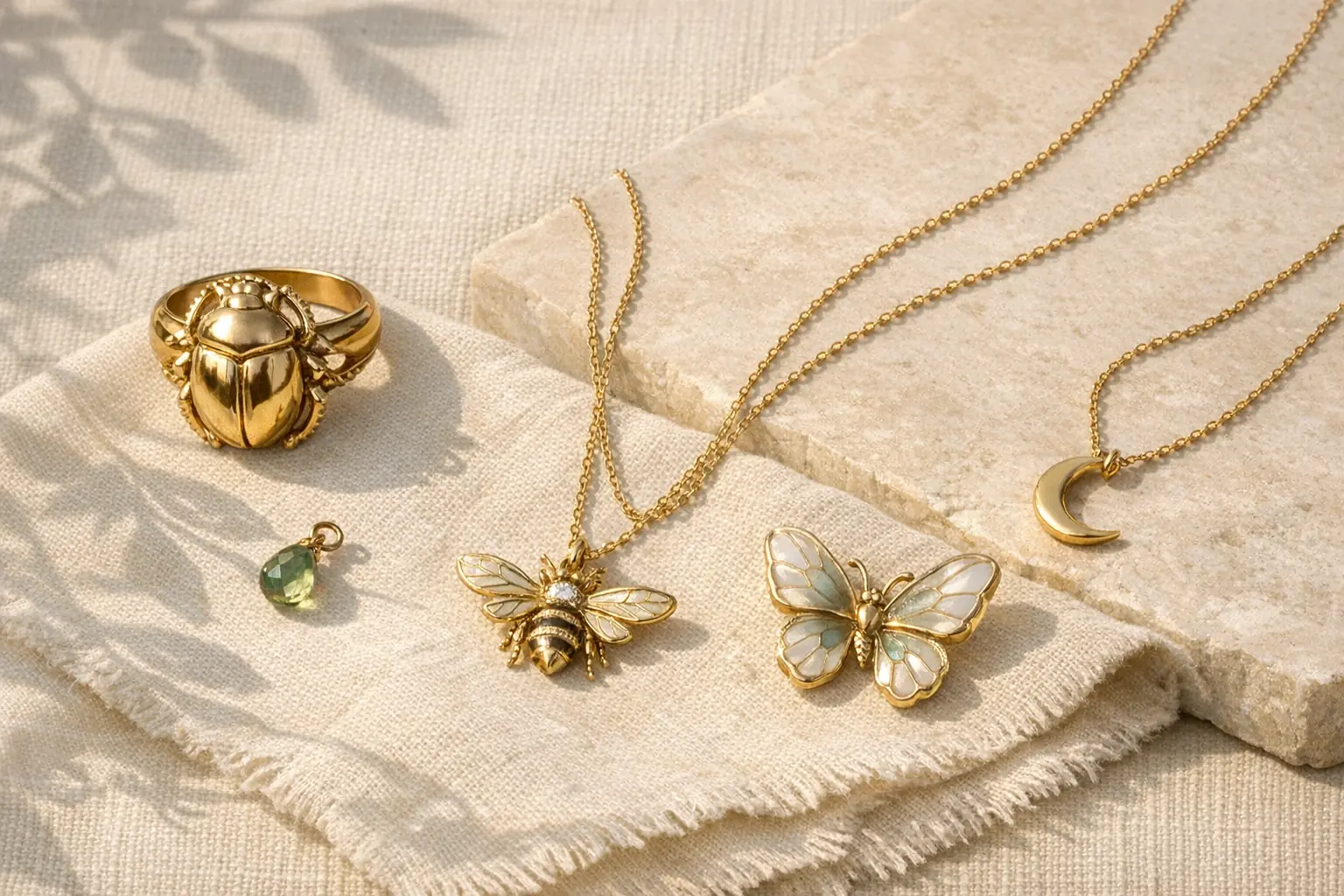
In ancient Egypt, the scarab was associated with Khepri, a deity connected with the rising sun and becoming. The beetle’s habit of rolling a ball of dung was linked symbolically to the sun’s movement. That connection made the scarab a powerful image of renewal, regeneration, and the cycle of life.
Scarab amulets served several roles, including use as seals and in funerary contexts. They were more than decorative beetles; they belonged to a broader religious understanding of life and rebirth.
Today, a scarab motif can be a thoughtful reminder that a difficult chapter doesn’t have to define the next one. It might mark returning to work, moving somewhere unfamiliar, or starting over after a plan falls apart.
Your intention could be simple: I can begin again without starting from nothing.
The bee: diligence with a sense of community
Bees often symbolize industry, cooperation, and the value of contributing to something larger than yourself. Their shared work makes them an especially fitting motif for people building a career, nurturing a family, or finding their place in a community.
But a bee doesn’t have to stand for endless productivity. For a busy professional, its meaning might be less “work harder” and more “good work depends on connection.”
A bee pendant could celebrate a promotion, a collaborative project, or the launch of a small business. It can also honor the mentors, friends, and colleagues who helped you get there.
Try an intention such as: I’ll do meaningful work and make room for support.
The butterfly: transformation and hope
A butterfly’s life cycle makes it an intuitive symbol of change. Its movement from caterpillar through chrysalis to winged adult has inspired associations with transformation, new life, and hope.
As a personal motif, it works beautifully for milestones that involve becoming: graduating, changing direction, developing confidence, or stepping into a different role.
There’s no need to turn every hard experience into a neat transformation story, either. A butterfly can simply acknowledge that change is happening, even when the outcome remains uncertain.
Your reminder might be: I’m allowed to grow at my own pace.
3. How Nature Became Wearable Art
Insect jewelry didn’t travel in a straight line from ancient amulets to today’s accessories. Later designers returned to nature with different interests, techniques, and ideas.
During the Victorian era, enthusiasm for natural history, gardening, and collecting helped bring plants and insects into decorative fashion. Jewelers created bees, beetles, butterflies, and other creatures using colored gemstones, enamel, and precious metals. Some designs aimed for recognizable detail; others transformed an insect’s body and wings into imaginative arrangements of stones.
Victorian jewelry also had a strong culture of sentiment. A small motif could carry an affectionate message, commemorate a relationship, or express an interest in the natural world. Meaning and ornament were often intertwined.
Art Nouveau, which flourished around the turn of the twentieth century, took those natural references in a more fluid direction. Rather than simply reproducing an insect, designers emphasized sweeping lines, delicate wings, and organic shapes. Butterflies and dragonflies were particularly well suited to this approach.
Enameling techniques such as plique-à-jour, which allows light through translucent enamel, helped create wing-like effects reminiscent of stained glass. The result was jewelry that felt less like a miniature specimen and more like nature reimagined.
That history gives modern wearers plenty of room to play. You might prefer a detailed, vintage-inspired bee, an airy butterfly outline, or a clean, sculptural scarab. The motif carries the story; the design makes it yours.
4. Choose for the Moment—and Make It Personal
Start with the occasion you want to acknowledge, then choose a symbol that supports your own interpretation.
- For a new career: Choose a bee to represent collaboration and steady effort, or a scarab to mark a fresh professional chapter. A compact pendant or low-profile ring can fit easily into an everyday work wardrobe.
- For a personal milestone: A butterfly can celebrate growth, while a bee might honor a community achievement. Consider engraving a date or a short phrase if the piece allows it.
- For a fresh start: A scarab offers a historically rooted renewal motif. Pair it with an intention that names something you can actually do, such as applying for opportunities or making time for a neglected interest.
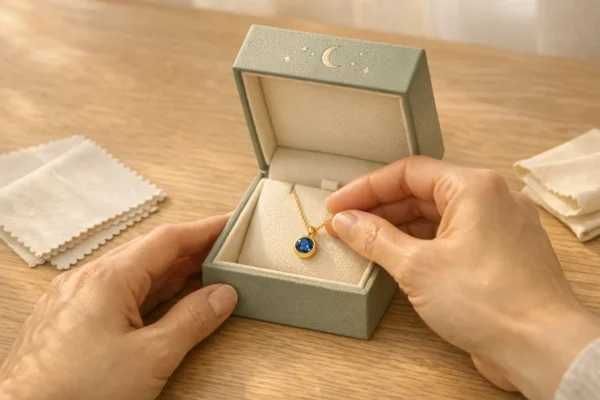
Next, add a personal layer. Birthstone jewelry can connect an insect motif with your own birthday or someone important to you. A butterfly pendant beside a small birthstone charm, for example, can mark both identity and change without making the look feel overly coordinated.
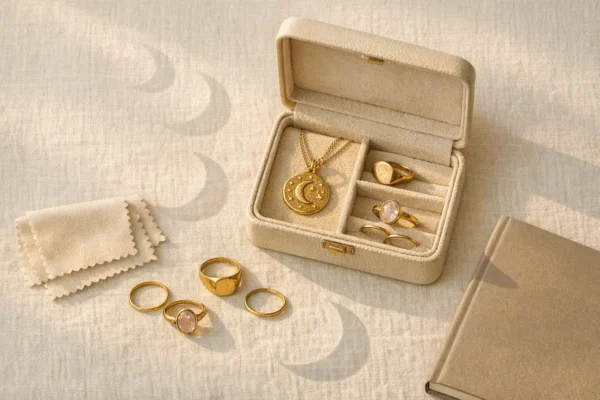
Celestial jewelry brings another visual language into the mix. A moon charm might represent a new phase; a star can stand for direction. A zodiac piece can reflect an interest in astrology without suggesting that your sign determines which jewelry you should wear.
Within Rochas Jewelry’s broader focus on birthstone and celestial styling, these combinations offer a way to build an individual look rather than follow a rigid “prescription.”
Keep the practical side simple:
- Let one detailed motif be the focal point.
- Use different necklace lengths so pendants have space.
- Pair a statement ring with quieter bands.
- Check dimensions, metal composition, plating, and care instructions before buying.
- If sustainability matters to you, look for specific information about sourcing and recycled content rather than relying on broad labels.
Finally, connect the piece to a small habit. When you put on your bee necklace, choose one meaningful priority for the day. Let a scarab ring remind you to take the next step, even if it’s modest. Use a butterfly charm as a cue to notice progress without demanding perfection.
Symbolic jewelry isn’t a proven source of protection, wealth, or healing. What it can offer is a meaningful connection between an object you enjoy wearing and a purpose you want to remember.
The jewelry doesn’t make the change happen. It helps you keep your intention close while you do.