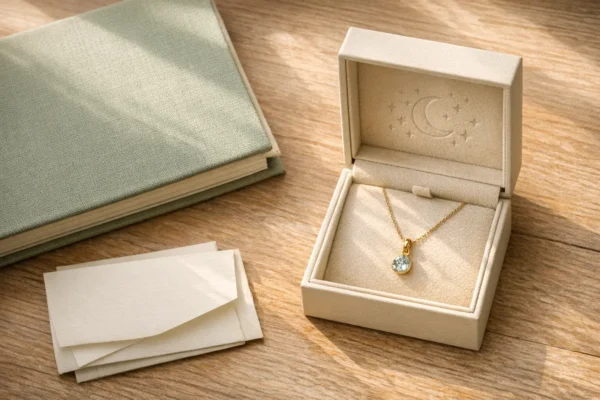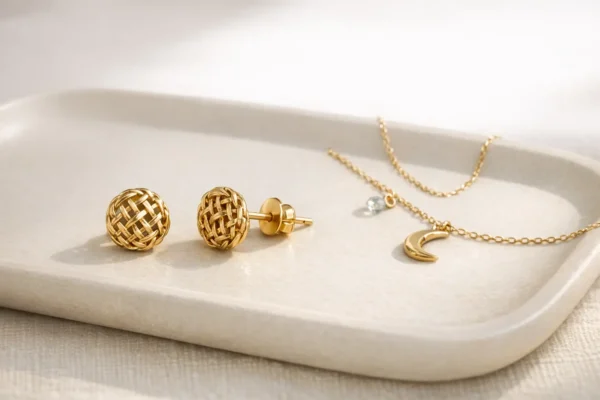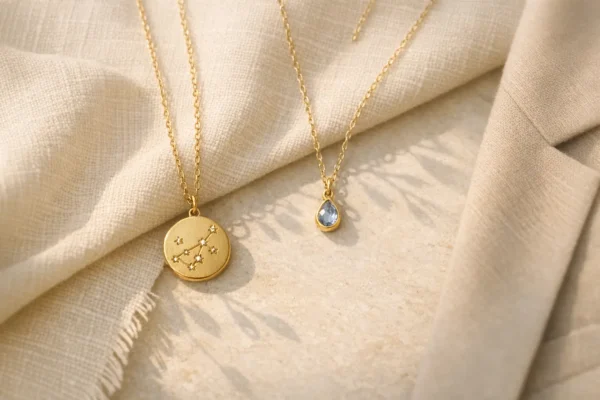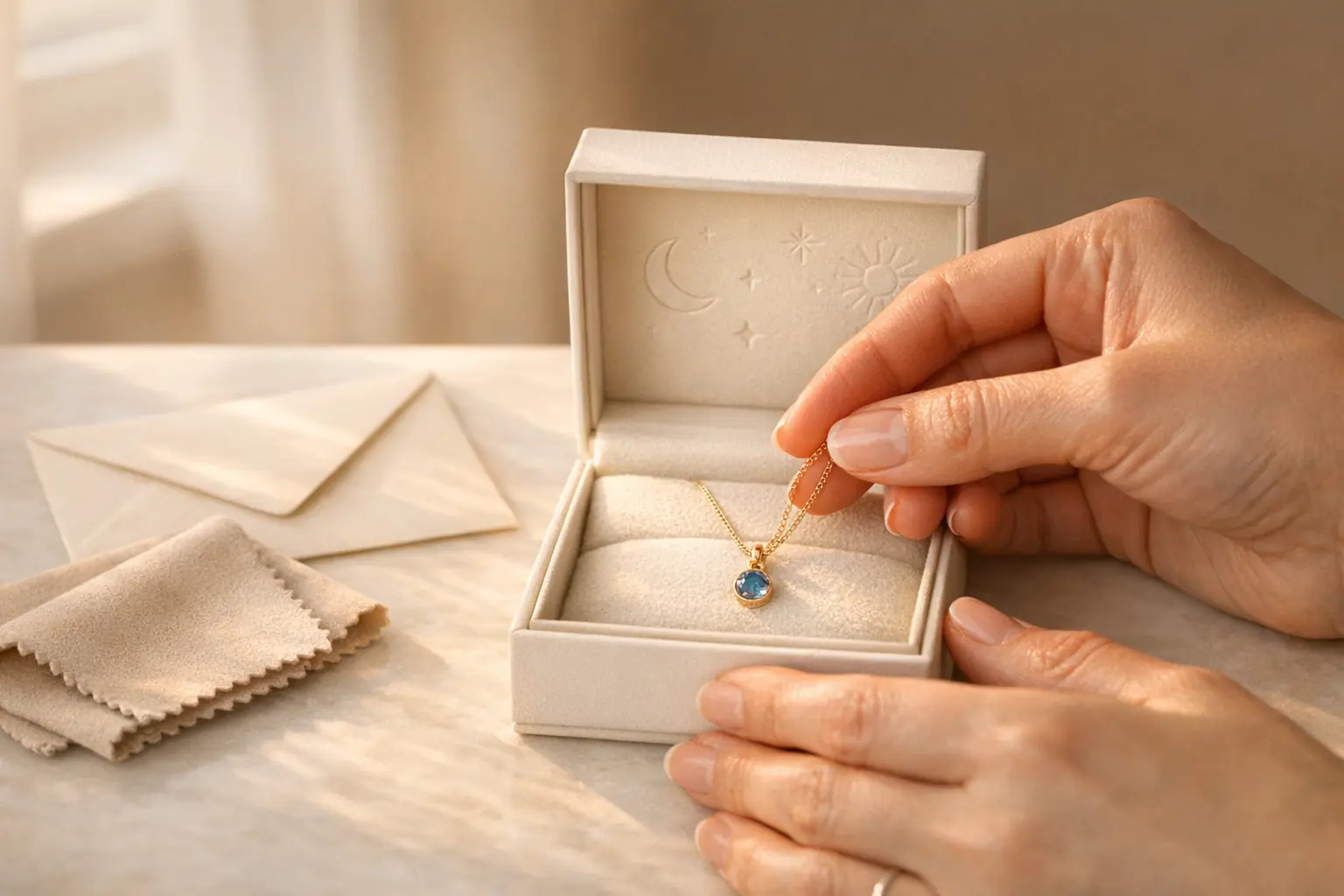
A birthstone gift can mark a new arrival, celebrate a birthday, or say, “You’re loved, wherever life takes you.” And unlike a gift they’ll outgrow by next season, a thoughtfully chosen keepsake can become more meaningful over time.
For parents drawn to Rochas Jewelry’s intention-led approach, that’s the real appeal: choosing something personal without needing it to be flashy or expensive.
Birthstones carry stories and associations that vary across cultures and traditions. Here’s a quick guide to common modern birthstones and the meanings often attached to them:
- January — Garnet: friendship, loyalty, and protection.
- February — Amethyst: calm, clarity, and wisdom.
- March — Aquamarine: courage, serenity, and safe journeys.
- April — Diamond: endurance, strength, and lasting love.
- May — Emerald: growth, hope, and renewal.
- June — Pearl, moonstone, or alexandrite: innocence, intuition, or transformation.
- July — Ruby: vitality, passion, and courage.
- August — Peridot, spinel, or sardonyx: positivity, resilience, or strength.
- September — Sapphire: wisdom, truth, and loyalty.
- October — Opal or tourmaline: creativity, hope, and compassion.
- November — Topaz or citrine: warmth, joy, and abundance.
- December — Turquoise, tanzanite, or zircon: protection, transformation, or wisdom.
These are symbolic associations, not scientifically established effects. A stone associated with protection doesn’t prevent accidents, illness, or harm. Likewise, a “calming” birthstone isn’t a treatment for anxiety.
You can still make the symbolism deeply personal. Pair the gift with a note: “May this remind you that you’re loved and supported.” That gives a protective wish an honest, lasting meaning.
2. Choose for Their Age—Not Just Their Birthday
The best birthstone gift isn’t always something a child should wear right away. Sometimes, choosing a piece for later is the most thoughtful option.
For babies and toddlers, favor a stored keepsake. Jewelry can introduce small-part, choking, strangulation, and snagging hazards. Beads, charms, stones, clasps, and earring backs may detach, even from pieces that look sturdy.
Necklaces are particularly concerning because they can tighten or catch around the neck. Don’t use birthstone necklaces, bracelets, or anklets as teething aids, and keep jewelry out of cribs, bassinets, and other sleep spaces. Supervision doesn’t make a necklace an appropriate choice for an infant.
A pendant tucked away for a future milestone can celebrate the same birth without introducing an everyday risk.
For younger children, readiness matters more than a birthday cutoff. A child who still mouths objects, pulls at accessories, or can’t reliably follow removal instructions may not be ready for wearable jewelry. There’s no single age when every design becomes safe.
If you’re considering occasional wear, look for products specifically intended for the child’s age, with clear safety information. Avoid dangling components, sharp edges, loose settings, and long chains. Neither a secure clasp nor a breakaway feature makes a necklace risk-free.
For older children and teens, involve them in the choice. A low-profile design may fit their routine better than a dangling charm. Check fit regularly as they grow; rings and bracelets shouldn’t pinch or restrict circulation.
Jewelry should come off before sleep, sports, rough play, and activities where it could catch on equipment. Follow school and activity rules, too.
For any child, describe the gift as a reminder of care—not something they must wear to stay protected.
3. Read the Materials, Not Just the Product Name
“Gold,” “birthstone,” and “hypoallergenic” can sound reassuring, but they don’t tell the whole story. Before buying, look for a clear description of every component that touches skin.
Rochas Jewelry’s accessible-luxury approach includes plated metals and other durable materials. The important step is checking the individual listing rather than assuming every piece uses the same construction.
Ask these questions:
- What’s underneath the finish? Gold-plated sterling silver and gold-plated stainless steel have different base metals and care needs. “18K gold-plated” describes the gold layer, not a solid-gold piece.
- What is the stone? Is it a natural gemstone, a lab-created gemstone, or a glass or crystal imitation? A birthstone-colored keepsake can still be meaningful, but its identity should be disclosed.
- Are treatments disclosed? Dyes, coatings, fillings, and other treatments can affect care and durability.
- What are the posts, backs, clasps, and solder made from? Small components matter just as much as the main setting.
- What children’s-product safety information is available? Ask about applicable lead and cadmium limits, testing, and age suitability. Adult jewelry isn’t automatically appropriate for children.
A “medical-grade 316L stainless steel” description doesn’t mean nickel-free; 316L typically contains nickel. “Hypoallergenic” also isn’t a guarantee against irritation. For a child with a known metal allergy, ask their clinician for guidance and get specific material information from the seller.
Plating can wear down and expose the base metal. Copper may tarnish or leave green marks on skin, while sterling silver can also tarnish. Neither a premium-sounding label nor a low price settles the safety question.
If sustainability matters to your family, look for specific explanations of recycled content, sourcing, and carbon-neutral claims. Those are valuable purchasing considerations, but they don’t replace child-safety information.
4. Make Care Part of the Gift
A keepsake that lasts needs more than a lovely box. Different stones, settings, and finishes need different care, so keep the product instructions with your purchase.
For many pieces, a soft cloth after wear is a useful starting point. Use water, soap, or cleaning products only when the maker confirms they’re suitable for the entire piece—not just the metal.
A few habits help:
- Remove jewelry before swimming, bathing, and messy play.
- Keep it away from perfume, lotion, and household cleaners.
- Store pieces separately to reduce scratches and tangles.
- Avoid ultrasonic cleaners, steam, and harsh polishing products unless specifically approved.
- Check settings, clasps, posts, and links regularly.
Pearls and opals, for example, need gentler handling than many harder stones. Plated finishes can also be damaged by abrasive cleaning.
If you spot a loose stone, damaged clasp, rough edge, or peeling finish, stop using the piece until it’s assessed. Remove jewelry if redness, itching, swelling, or discomfort develops, and seek medical advice when appropriate.
Inspection helps catch wear, but it cannot eliminate jewelry hazards.
5. Let the Keepsake Grow Into Its Moment
Buying now and wearing later isn’t a compromise. It can be the whole idea.
Choose a birthstone pendant or another meaningful piece, then store it securely somewhere the child cannot access. Keep the receipt, material disclosures, stone details, and care instructions together. Add a handwritten explanation of why you chose it.
Over time, the keepsake might become a graduation gift, a milestone-birthday present, or a reminder of home when they move away. A jeweler may be able to resize or adapt certain designs later, although that depends on the materials and construction.
For families exploring Rochas Jewelry’s symbolic pieces, the strongest intention is simple: choose thoughtfully, ask clear questions, and let safety determine when the gift becomes wearable.
The stone doesn’t have to protect them to carry a protective wish. Its lasting value can be the story it holds—and the care you took in choosing it.